Why Can’t We All Just Get Along?

I’ve taught a variety of math and psychology courses to high school and college students over the years. Some people have been impressed that I teach math but unimpressed that I teach what they consider the trivial, common-sense subject of psychology. However, we humans have figured out the math necessary for space travel, but still haven’t discovered how to live in peace. We’ve developed complex weapons of mass destruction but remain baffled as to how to keep from using them. So I wonder, which is more difficult, more important: math or psychology?

Psychology is the scientific study of our mental states and processes as well as our behaviors. We’re affected by both our biology and our environment. In order to create an environment where we can all get along, we need to understand our neurobiology. We are less likely to be tricked or manipulated when we are aware of how our minds work. Without awareness, we may become captive to instincts and subconscious processes that may or may not be useful to us.

I’ve selected four human characteristics that affect our ability to get along, starting with what psychologists like to call our reptilian brain, the home of our survival instincts.

Survival Instincts

Our reptilian brain contains our limbic system. It’s good at reacting quickly and spotting danger – real or imaginary. It’s essential to our safety, but it also gets us in lots of trouble when we aren’t in control of it. We should never make it our CEO (chief executive officer). When it comes to decision making, our cerebral cortex, which contains our frontal lobe and executive functions, is far better able to help us reach rational decisions. When anxiety or fear is getting the best of us, we can find ways to calm ourselves and upshift our thinking to areas of the brain equipped for productive problem solving.

The Binary Instinct – Us Versus Them Thinking

Complex, deep thinking takes time and perseverance. It’s easier to put things in two distinct categories (black and white – no gray, please) and decide between them. So when it comes to issues, we are propelled by our genetics to either win or lose, be right or wrong. For example. . . Immigrants are good or bad. My political party is good, the other one is bad.  The people who hurt me are all bad, and I refuse to see any good in them. I’m too busy, perhaps too angry as well, to think any further. Quit bothering me with specifics or facts that go against what I believe is correct.

Mirror NeuronsObservational Learning

We are copycats. This often works very well for us, which is why it’s part of our biological heritage. As children, we automatically learn by watching our parents and those around us. But as a parent, I sometimes resemble the remark, “If I can’t be a good example, at least I can be a horrible warning.” The world is full of poor role models. This, however, does not stop us from copying them. You insult me, I insult you back. You hurt me, I hurt you or whoever else happens to be handy. Abused or oppressed people sometimes end up doing unto others the same immoral act as was done unto them, never thinking about how crazy it is to be mimicking bad behavior.

Need to Belong – Submission to Authority

The greatest crimes in the world are not committed by people breaking the rules but by people following the rules. It’s people who follow orders that drop bombs and massacre villages.
― Banksy, Wall and Piece

We need each other. That can be a good thing. Or, as Banksy points out, it can be catastrophic. We follow authority so we can remain part of a group, so we can belong. It feels virtuous to know we’re one of the “good” people who follow our righteous leaders on what we’re convinced is the correct moral pathway. We are led to believe there are exceptions to the Golden Rule; limits to values like forgiveness, compassion, and generosity. And so, we’re willing to kill and harm people we don’t know. People who are sons, daughters, mothers, fathers. Why? Because we’re told it’s the right thing to do and we want to do the right thing.

The disappearance of a sense of responsibility is the most far-reaching consequence of submission to authority.
― Stanley Milgram, Psychologist

Stanley Milgram researched obedience. You can read about his work here. He found that kind, caring people could do awful, mean things if ordered to do so by an authority figure they trust. We need to belong because we aren’t equipped to survive on our own. But if we want a peaceful world, a happy home, we will need to examine the directives we are given from authority sources and determine whether they truly match our values. We need to be careful who we follow.

How Can We All Just Get Along?

It’s the economy, stupid! Make War and Violence Less Profitable

Dwight D. Eisenhower, WWII general and former president of the United States, warned us about the military-industrial complex. Armament manufacturing and military bases play a huge part in our economy. If we were conducting our battles with dialogue and negotiations instead of guns, bombs, drones, etc., powerful people would fear for their bank accounts. The people making money on violence generally aren’t the ones suffering from PTSD, service-connected diseases or injuries, destruction of their homes and communities, loss of loved ones.

We obviously need a military and Eisenhower wasn’t talking about doing away with the defense industry. He was warning us of the need to be vigilant in monitoring the military-industrial complex because he recognized it was vulnerable to the abuse of power.

Dramatize More Stories of Peace, Justice, and Reconciliation

Violent conflict resolution is profitable, plus dramatic and exciting. Brutal movies sell and appeal to our reptilian brain. War stories involving bravery and victory are inspirational. But if we really want to all get along, how about more moving, inspiring stories of courageous people who have achieved peace and justice through dialogue and finding common ground? Stories in which people have had the courage to humanize their “enemies” and solve problems nonviolently.

Fix the Problem, Not the Blame

Blaming and shaming don’t lead to innovative solutions because they’re reactions, not answers. We’re mad because things didn’t go our way, so we get wrapped up in our egos, take offense, and end up off course, somewhere in the weeds. One way to avoid this is by adopting what’s been called the Chatham House rule. The goal is to focus on the issue only, not individual personalities or labels. When you speak your opinion, your identity is protected (names are not connected to ideas), so you don’t have to worry about being attacked and you don’t have to compete for a win. You work to resolve an issue productively and remind yourself, “It’s not all about me.”

Teach the Benefits of Dialogue versus Debate

Dialogue is a cooperative process with the goal of exchanging information and building a collective perspective. Debate is competitive and is often more concerned about winning than truth. Dialogue considers the dignity of all and involves civil discourse; debate often belittles the other person.

Civil discourse means constructive dialogue and that is much tougher than uncivil discourse, in which we give our reptilian brain free reign. Civil discourse means listening to different perspectives, respecting others, taming our fearful instincts, and putting time and effort into genuine understanding. We attack issues, not people. Tackle problems, not our neighbors. We’re more curious than judgmental; more compassionate than vengeful.

Math is important, but understanding psychology is essential to our survival. It teaches us how we can all just get along.

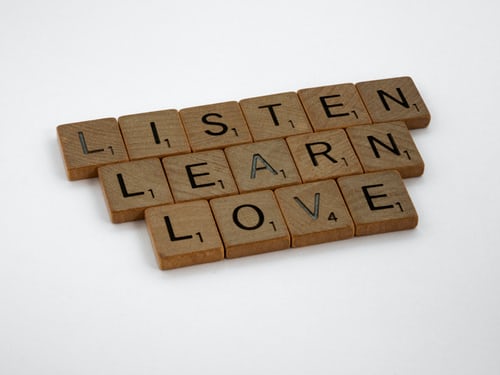
Photo credit to Viktor Aheiei
How To Avoid “Troubles”

 We in the United States have been experiencing troubles. “Troubles” is a term used to describe public unrest and disorder. On January 6th, we witnessed the storming of our Capitol and violent attacks on Congress. Riots and protests brought on by racial injustice, mass shootings, and hate groups fuel our troubles. Conspiracy theories and the spreading of dangerous misinformation spark our troubles.

Amidst our troubles, South Dakota governor Kristi Noem persuaded the state’s legislature to spend almost one million dollars to establish a new South Dakota Civics curriculum. She said the “common mission and key objective needs to be explaining why the USA is the most special nation in the history of the world.”

That comment made me recall a Pickles cartoon in which Grandma tells Grandson, “You’re unique and special, just like everybody else.” Some people believe in American exceptionalism – we’re the best and the brightest ever – but what about the people who question that or who think every nation is special in its own way?

If our mission is to teach students the USA is the most special nation in the history of the world, are we going to let students use their critical thinking skills to analyze that statement – or will we insist they accept American exceptionalism and feed them only information that supports that goal?

I’m proud of the ingenuity, tenaciousness, and strength my pioneer ancestors demonstrated as they survived and even thrived on the Dakota prairie. They came from Sweden, Great Britain, Germany, Russia, and who knows where else, and they worked hard to create a better life in what was to them a new land full of much needed opportunity. But I’m not going to deny the slave ship captain in the family tree that was discovered by my historian uncle, or ignore the duplicity and inhumanity that allowed European immigrants to acquire the land of the Indigenous people.

It’s natural to want to feel good about ourselves and our nation, but not at the expense of truth and excellent reasoning skills. If we’re truly patriots who love America, we embrace our country, warts and all, and accept the fact that all people – and nations – have strengths and weaknesses. If we can’t be honest about our mistakes, our faults, our ignorance, because we’re clinging so tightly to our superior identity, we won’t be able to develop, to adapt, and to learn from anyone whose viewpoint is different from ours. 

From 1968 to1998, Northern Ireland experienced the conflict commonly called “The Troubles,” a turbulent time in which a low-level war was fought between Catholics (Irish nationalists) and Protestants (British unionists). Catholics wished Northern Ireland would become one with the Republic of Ireland and Protestants wanted to remain part of the United Kingdom.

I visited Northern Ireland several years ago and learned that the Catholic position in The Troubles did not necessarily have anything to do with religion. As our taxi driver stated, “I’m Catholic, but I’m not religious.” The Troubles resulted from a history of injustice and prejudice, and they were eased through cooperative efforts to reduce anger and promote greater fairness throughout society.   

Northern Ireland suffered The Troubles because Protestants thought they were more special than Catholics and vice versa. But The Troubles became less troubling when Queen Elizabeth apologized for the injustices her government had inflicted on the Irish Catholics. On my tour of the Republic of Ireland, our Irish tour guide became quite emotional as she expressed her gratitude for Queen Elizabeth’s acknowledgement of oppressive actions and injustice on the part of the British. When someone sincerely apologizes and takes responsibility for the harm that was done, fear is reduced, and trust can be established. We really can’t trust someone who isn’t aware of the pain they have caused, because people are unable to change if they do not recognize what needs changing.

Education for Mutual Understanding was a program established in schools in Northern Ireland to ease The Troubles and they are currently promoting a curriculum entitled “Integration Works – Transforming Your Schools.” Students are taught to listen and empathize and are given skills to help them respond to personal and systemic injustice with compassion and creativity instead of anger and aggression. Healthy forgiveness is emphasized, meaning having the courage to confront issues with a genuine desire to understand, while working for peaceful solutions beneficial to all. Students are not taught that one group is more special than another but are instead asked to respect the inherent worth of all people.

Our brains are programmed for survival in wild environments and therefore our default system leads us to revenge, aggression, and competitiveness as we fear we won’t have enough resources or will be harmed by “the others.” We may grasp conspiracy theories instead of scientific explanations because they fit our preconceived notions and biases and require less effort to understand.

To avoid troubles, we need education that helps us understand how our brain works and that improves our thinking skills. Misinformation and conspiracy theories are dangerous, but the good news is we can be taught how to evaluate information and search for valid, reliable sources. We can learn skills that help us appreciate different perspectives and develop the ability to disagree without being disagreeable.

While teaching high school, I encountered students who were surprised to learn they could be angry without lashing out or running away. Because I didn’t lose my temper (usually, anyway) they assumed I was never angry. I assured them I did get angry, and we talked about ways to be assertive instead of aggressive or passive – to control our anger so it doesn’t control us.

I remember a situation in which students in rival gangs were invited into a mediation session that focused on creating win/win solutions. Students were amazed to discover that their foes had feelings and concerns much like their own. What was the secret to their discovery? One student explained, “I’d never listened without interrupting. I’d just assumed I knew what the others were thinking, and I only cared about what I thought.” Members of each side were able to express themselves without interference, and they then worked on fixing the problem, not the blame.

In that mediation session, the students were forced to listen to each other. The desire to listen compassionately to those outside our in-group doesn’t come naturally. Why? Because we may hear something that could upset our view of the world and our cherished beliefs. Changing our thoughts and behaviors is stressful. We worry about what our in-group will think. We could lose relationships and important connections if we’re seen as sympathetic to “those people” – the others who aren’t like us.

But it can be exciting and freeing to break down the wall we’ve constructed with the building blocks of fear, unclench our fists, quit gnashing our teeth, and let new insights and awareness flow through us. There is freedom in forgiveness and there is joy in learning and discovering.

Recently, Northern Ireland has again been plagued with violence. Brexit and economic problems have sparked rioting. These new troubles remind us our ability to effectively resolve conflict needs constant work and effort. Our mental and spiritual health requires tending in the same way our physical health does. If we do not keep working on our forgiveness and peaceful problem-solving skills, they will atrophy and our fight-or-flight instincts will predominate.

If we truly want a peaceful, just world where all human beings are respected and treated fairly and kindly, we won’t choose a curriculum that dictates one nation or one type of person is more unique and special than another. That’s the type of curriculum that was taught in Germany and Japan before World War II. If we want to avoid troubles, we will teach our students how to be kind, respectful, generous, and forgiving to everyone, not just to their own group. We will give them the skills needed to analyze and evaluate information.

And we will remind them they are unique and special, just like everyone else.