Self-Forgiveness Opens the Door to Forgiving Others

Never be defined by your past. It was just a lesson, not a life sentence.

~Tiny Buddha

Forgiving is for giving. Self-forgiveness can be a life-changing gift we give ourselves that opens the door to forgiving others. If we haven’t experienced compassion and grace ourselves, how can we share it with others?

Forgiving ourselves is hard, and that’s a good thing. We need to feel remorse when we’ve caused pain or injustice. We don’t want to function like sociopaths who have no anxiety or guilt when they harm others. But we need to take on the difficult task of forgiving ourselves so we don’t hide in shame, or even worse, deny our wrongdoing and blame others for our offensive behavior or mistakes.

If we can’t forgive ourselves, we generally journey down one of two destructive paths. I call them The Dead-End Road of Shame and The Abusive Highway of Blame.

Following the Dead-End Road of Shame is different than admitting guilt. Guilt is a motivator that drives us to understand our behavior and decide to do better. Learning from our missteps is productive and allows us to grow and evolve.

Shame, however, means believing we are “bad” and unworthy of forgiveness. We believe our past mistakes and transgressions are fatal and use them as a reason to give up, become stagnant, and isolate ourselves. Shame hurts our relationships. It prevents us from sharing the joy of unconditional grace and the peace that comes with accepting our limitations.

The Abusive Highway of Blame is traveled when we don’t have the courage to own our mistakes and bad behavior. If we fear judgment or punishment because of something we’ve done, finding a way out of our mess that doesn’t involve taking responsibility and admitting wrongdoing may define our journey.   Blaming others is an attempt to stay out of trouble. However, it keeps us from forgiving others because that would mean we have to quit blaming them and become accountable for our actions.

A manipulative tactic sometimes used on the Abusive Highway is what Professor Jennifer Freyd calls DARVO: Deny, Attack, and Reverse Victim and Offender. If we’d rather be right than truthful and are afraid to acknowledge what we’ve done, we may deny, attack, and step into the sinister scenario of accusing those we’ve hurt of being the “real” offenders. We may claim those we’ve offended deserve our abuse or are falsely accusing us of wrongdoing. This strategy is especially harmful when DARVO warriors are attacking vulnerable people who lack the confidence to stand up for themselves.

When DARVO is used politically, it may lead to competitive victimhood. “You started it.” “No, you did.” “It’s your fault.” “No, it’s your fault.” Each side attacks the other self-righteously and protectively. Refusing to listen. Refusing to admit any wrongdoing or mistakes. Refusing to cooperate and collaborate.

Our life journey becomes more joyful and kind when we reject the Dead-End Road of Shame and the Abusive Highway of Blame and choose instead to follow the Path of Forgiveness. We replace shame and blame with courage and compassion and create a new story in which we move forward with honesty and integrity. We reclaim our dignity.

The foundation of forgiveness is acceptance of the messiness of the human condition. Forgiveness is built on the knowledge that we normal, imperfect humans must learn through struggle and errors.

Bad behavior doesn’t mean we’re bad people. We can learn and grow by understanding why our actions failed or were hurtful. We can figure out how to do better in the future. Only when we know better will we be able to do better.  

The ability to forgive ourselves for our human deficiencies frees us from an overemphasis on perfection and allows us to enjoy discovery and innovation. Jonathan Biss, concert pianist, wrote an opinion piece for the NY Times lamenting that classical musicians are trained to prevent mistakes, but they aren’t trained to talk to God. He explained, “You cannot learn or grow while trying to appear as if you have everything figured out. You cannot talk to God by trying to avoid doing something wrong.”

In other words, if we’re afraid to listen to our inner, spiritual voice because we fear messing up, we will miss out on magical moments and creative breakthroughs. Unrealistic expectations and a quest for perfection may imprison us and block the excitement and curiosity that naturally occur when we’re embracing the pleasures of learning and finding joy in the mysteries of life. 

Beatrice Wood, American artist and studio potter, said “My life is full of mistakes. They’re like pebbles that make a good road.” Pebbles are the aggregate that makes roads resilient. Mistakes can do the same for us.

The roads we follow are unique. Sometimes pebbles feel more like boulders that are impossible to move. All our journeys contain regrets, grief, and sadness. We struggle with darkness, but the good news is we can replace it with light and build something new. That’s what the forgiveness process is all about.

Self-forgiveness is not about pardoning ourselves or anyone else for wrongdoing, and it’s not about forgetting what happened. It’s the opposite. It’s about accepting imperfection, stepping on our pride, and taking responsibility for our feelings and actions. It’s about dropping facades and opening our hearts to love fully. It’s about resilience, because we’re not afraid to try new things, reach out to others, and evolve.

The path of forgiveness leads to transformation and becoming our genuine selves. When we do that, we have nothing to hide and no one to blame.

Give yourself the gift of forgiveness. And be sure to pass on the joy and peace it brings you to others.

Photo by Harli Marten on Unsplash

Overcoming Trauma Through Forgiveness

Have you had experiences in your life that were extremely disturbing and still cause you emotional sadness or fear? Do you belong to a group that has been, or is currently being, oppressed or victimized?  If you answered no to both questions you are uniquely blessed.

Human history is full of trauma. I’m an educator and experienced at teaching world history. My students loved studying the wars, especially the dramatic world wars when humans were traumatized on a global level. Sometimes we think of history as studying one war after another, as if all we humans do is kill each other in the name of some grand or greedy cause. One student told me she couldn’t do a report on the recent history of Brazil because Brazilians hadn’t been in any wars during the last fifty years.

Survival as a human has rarely been easy. Prehistoric humans faced dangers like wild animals, food scarcity, and harsh weather conditions from which they had little protection. Fast forward to the last millennium and we find our hardships continuing.  

Europeans who had been traumatized in their home countries – by oppression, famine, homelessness, persecution of some kind – came across the ocean to what they referred to as the New World and inflicted trauma on the Indigenous people and the Africans they subjugated as slaves. Females have been viewed as property and had little recourse against rape or domestic abuse. Alpha males have made other males their pawns and directed them to kill and be killed for questionable causes. Kings, queens, and autocrats were constantly in danger of being beheaded or falling prey to some other sort of horror as those around them competed for power.

What has all that trauma done to us? It has indeed sharpened our survival instincts. We are equipped with an emotionally reactive amygdala that is powered by fear. It can override the rational, decision-making part of our brain, the prefrontal cortex, because it’s programmed for quick, life-or-death protective action. Sometimes the amygdala is a hero, saving us from dangerous predators and accidents. But at other times, it destroys relationships and causes high blood pressure.

We have evolved to automatically focus on negatives because we need to be ready to defend ourselves against the perils of the world. But too much fear over long periods of time causes overexposure to the hormone cortisol, which disrupts our body’s natural processes and increases our risk of health problems like heart attacks and headaches.  

Grouping people into “good” and “bad” categories and perceiving the world as a place where it’s “us against them” has protected us from harm as we banded together against them. But whether we like it or not, we are all connected. Viruses don’t honor national borders, and combatting the negative effects of climate change will take a global effort. Nuclear weapons have the capacity to destroy all the humans in the world, but I’m guessing cockroaches will somehow survive, as fossil evidence indicates they have for around 300 million years. 

Why have cockroaches survived? It’s not because they are extremely fearful and have developed ingenious ways to punish and kill each other. It’s because they are good at adapting to changing and difficult conditions. They “overcome.”

Overcoming trauma, for humans, requires the ability to calm our instinctual fears and use our prefrontal cortex to adapt to whatever environment we find ourselves in.  Scientist Marie Curie advised, “Nothing in life is to be feared, it is only to be understood. Now is the time to understand more, so that we may fear less.” Understanding helps us overcome our fear, heal from our trauma, and adapt to whatever situation we find ourselves in.

Fear can take the form of what Lakota writers have called Iktomi, the trickster. We must be careful because we can be tricked into harmful behavior unless we are self-aware and able to understand what we fear. That’s why Eleanor Roosevelt said, “You gain strength, courage, and confidence by every experience in which you really stop to look fear in the face. You are able to say to yourself, ‘I have lived through this horror. I can take the next thing that comes along. ‘”

All the major religions recognize self-control and forgiveness as virtues because fear, negativity, and demonizing “others” can lead to destructive decision making. We need to quiet down our amygdala and convince it to hand over control to what psychologists call our “executive function” – the part of our brain that can reflect and effectively problem solve.

A Bible verse, 2 Timothy 1:7, reads “For God gave us a spirit not of fear, but of power and love and self-control.” 1 John 4: 18-19 tells us that love — genuine love for ourselves, for each other, and for God — can overcome all fear. But self-control isn’t easy, nor is loving without conditions. It’s something we must genuinely desire and strive for.

“Moral injury” is a term psychologists use to describe a wound to our inner soul. It’s a type of trauma and it happens when our actions, or the actions of those we have admired and followed, runs contrary to our deeply held moral beliefs. This may happen in war, a time when survival instincts are on high alert, or anytime our foundational beliefs of goodness and truth are shattered. Our spirit suffers.

Forgiveness means letting compassion and grace heal us and set us free. Coming to terms with our own humanness, as well as embracing the humanity of others, allows us to let go of our fears and our bitterness at all the unfairness and cruelty in the world. We still work for justice and kindness, but with the guidance of that part of our being that directs us forward with hope and love.

Orson Scott Card wrote, “When you really know somebody, you can’t hate them. Or maybe it’s just that you can’t really know them until you stop hating them.”

That advice goes for knowing ourselves as well. We can shed our shame and resentment by accepting our humanness and forgiving ourselves for not being everything we assume we should be. We can reject a culture of blaming and liberate ourselves from fear. We don’t have to hide from the truth or distort it to feel in harmony with the world.

Deeply distressing, disturbing experiences – traumas – are hard to overcome, but it’s worth the effort. Forgiveness helps us heal, making life a little easier and bringing joy and light into our darkness.

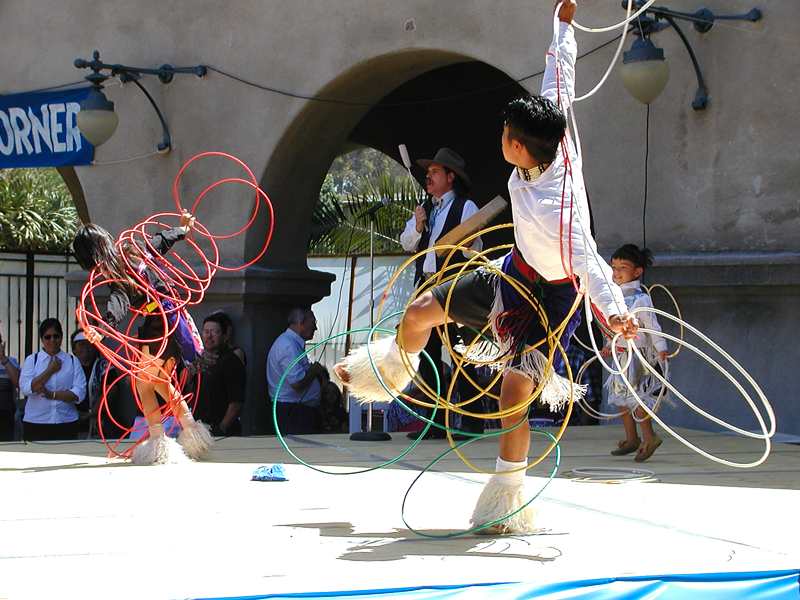
My favorite Native American dance is the hoop dance, and it inspired me to write the following words.

Great people don’t spend their time jumping through other people’s hoops.

Great people don’t spend their time creating hoops for other people to jump through.

Great people learn how to dance with hoops and create circles that inspire, include, and enrich others.

 Photo courtesy PDPhoto.org –  https://commons.wikimedia.org/w/index.php?curid=868316