Humility Is a Superpower

We come nearest to the great when we are great in humility.

~ Rabindranath Tagore (Bengali writer awarded a Nobel prize in literature)

“You don’t understand. Arabs aren’t like us. Their mothers don’t care for their children like ours do. Their leaders don’t protect them like ours do.” I was on a plane returning to the USA from a United Methodist Mission trip to Israel and the Palestinian West Bank. My seat happened to be in the middle of two Jewish Israeli citizens and I listened to the two men describe their fears and beliefs about Palestinian Arabs.

I’d had the opportunity to visit with a variety of people on my trip. People who identified as Jewish, Christian, and Muslim; Israeli and Palestinian Arabs. Our conversations centered around peace and justice, and I think they all had mothers who loved them dearly. I didn’t talk to members of Hamas. If I had, I would likely have heard remarks about Israelis similar to the ones I heard from my seatmates about Arabs.

I shared with my new Israeli companions that I’d met many wonderful people of different faiths and ethnicities during my travels. They weren’t impressed. “Of course, there’s a few good ones,” one responded, and the other nodded agreement.

I understood the men’s fear. Antisemitism has been and continues to be a real threat to peace and safety. But so is anti-Arab sentiment, anti-Muslim, anti-Palestinian, anti-Christian, and the list goes on and on. Our instincts tell us it’s “us against them.” But all the military might – the weapons, bombs, and drones that allow us to kill people we don’t know but somehow still hate – won’t bring real peace or safety. Wars create bitterness. Violence and oppression produce rage and terrorism.

I told my airline seatmates that I studied and taught about the wisdom (not the politics) of the world’s major religions and felt there was beauty and much for us imperfect humans to learn in all of them. They were skeptical. I get it. We humans are programmed to be fearful. We defend ourselves against people who we believe don’t think or act like we do. That’s what helps us survive.

Until it doesn’t.

Human history is full of war and violence. The idea that we need to fiercely fight an enemy for our freedoms seems firmly entrenched in our psyche. Our belief in the efficacy and necessity of war has not changed over the centuries. But technological advancements in the weapons of war have made the destruction of the human species a real possibility. We need to put forth a powerful effort to solve our conflicts differently.

That’s where the superpower of humility comes in. The major religions promote humility. Not as a weakness. Just the opposite. As a strength. The superpower of humility means we’re able to overcome our fears and have the confidence and self-control necessary to listen to those who challenge us, hurt us, and make us oh, so mad. Those whom we don’t understand – but we could if we put forth the effort.

Humility isn’t easy. It’s hard to hear ideas we believe are harmful. It’s hard to listen to people we fear will hurt us. But if we don’t listen, we won’t understand. And if we don’t understand, we’ll fix the blame instead of fixing the problem. We’ll keep fighting or fleeing when faced with tough situations and never resolve core issues.

When I returned from my travels to Israel and Palestine, I joined the Jewish Voice for Peace, a group which believes that ending apartheid in Israel and condemning all racism, not just antisemitism, is the way to keep Israel and the Jewish people safe. They  “envision a world where all people — from the U.S. to Palestine — live in freedom, justice, equality, and dignity.”

Christianity’s Jesus gave us a tough message. He said, “Love your enemies and pray for those who persecute you.” Those words were meant to protect us and help us look upon each other with compassion and empathy so we could solve conflicts without harming each other. So clouds of misunderstanding could be lifted and we could communicate with respect.

When we respect the dignity of others and they respect us, fear diminishes. Our rational brain kicks in and finds a way to create solutions that don’t harden our hearts and destroy our souls. We produce answers that don’t rely on death and devastation; that don’t create a cycle of revenge.

On a personal level, humility is a superpower that brings us peace of mind. We let go of the fear we are not good enough, or the desire to be better than others, and can just be our unique selves. We can fail and make mistakes without beating up on ourselves, because we accept the fact that we are only human and doing the best we can.

 A favorite Bible verse of mine is Micah 6:8 because it answers a question many of us have: How should we live our lives? The advice given is simply to act justly, love mercy, and walk humbly with your God.  

When we walk humbly with our God, we seek justice and we defend ourselves. But we do so with grace and compassion, knowing we all struggle and are always learning. Knowing that when we hurt another, we hurt ourselves.

When we listen well and extend dignity to all, we will be blessed with new insights, innovative ideas, and unexpected friendships. Humility is the superpower that enables peace in our personal lives and in our world. It’s what makes us great.

Photo by Vicky Sim at Unsplash

What Makes Hard Times Happy Times?

Happiness is not a goal, it’s a by-product.

~ Eleanor Roosevelt

“Beth remembered it as the best time in her life,” the museum volunteer told me. “Because even though they had nothing, every day they worked to make something out of nothing.”

I’ve been researching South Dakota life from around 1910 to 1950 for a historical novel I’m writing. Recently, my husband and I took a road trip to northwestern South Dakota and stopped at several small, local museums staffed by volunteers who were eager to share stories. They told me about tough times: food was scarce; weather could be ferociously cold or suffocatingly hot; disease, fires, and accidents were a constant concern.  But they also informed me that for many, those were happy times. The theme in our conversations: economic depressions aren’t always depressing.

What makes hard times happy times?

When I was straight out of college, I taught American history in Madison, SD. My students interviewed folks in the area who’d lived through the Depression years of the 1930s. I was surprised to find that many of the stories they collected described a happy time when people had little in the way of material goods, but still considered themselves rich. Rich in relationships. People pulled together as a community and found that being generous and kind, caring and sharing, provided a wealth of happiness.

A conversation I had years ago with an uncle from McLaughlin, SD, yielded the same information. My uncle was in his 90s and I asked him, “When you look back on your life, what are some of your fondest memories?” He responded that he enjoyed the Depression years. Curious, I asked why. “Because everyone was equal. The banker wasn’t any better than the farmer. We were all struggling, and we all pulled together to help each other out.”

The museum volunteers I talked to told me stories of orphans in the small South Dakota communities whose parents had died of various causes – war, disease, accidents. Some parents couldn’t afford to keep all their offspring. The children were taken in by families who had little room or food to spare, but lots of love to offer. One museum volunteer told me, “My parents took in whatever child needed caring for. We all slept on the floor together, played together. I didn’t even know about how people differentiated folks by skin color or where they were born until I was a teenager.” She had fond memories of those times.

There was plenty of tragedy. Not everyone survived. Many left for what were literally greener pastures. Indigenous families were heartbreakingly separated when children were taken by force to boarding schools, programmed to be ashamed of who they were and to become what government and religious leaders wanted them to be. Some people flourished while others perished. What made the difference? How were some people able to persevere? The answer for many: a caring community and supportive relationships.

I’ve been on mission trips to Lithuania, Nicaragua, Peru, Palestine, and Kenya. Exchanging gifts is culturally valued everywhere, and I’ve always received as well as given gifts – the most memorable being a live chicken.  However, the material gifts weren’t nearly as important as the friendships and cultural insights that I gained. I’ve found it’s easy to get caught up in our society’s focus on the dollar value of gifts and miss out on rich lessons we can gain from countries we often label as “third world” – as if we’ve discovered a legitimate way to rank nations.

I’ve learned that showing kindness and bestowing dignity is, in many ways, more important than providing food and material goods. Once, when sharing food with those in need, a man told me, “What’s important is that you feed our souls, not just our bodies.Our bodies need food to live, but our souls need love and dignity. Without a sense of belonging, purpose, and meaning, we can lose our will to live.

I feel sad when I read statistics about the rise in mental health problems and suicide rates in this country. Our society’s problems are different than those of 100 years ago, but human beings haven’t changed. We still need a supportive community, a place where we feel we belong, and an identity that provides us with dignity and purpose. Generosity and compassion need to be abundant. Hatred, anger, and fear scarce.  

I bought a copy of the Timber Lake and Area Centennial of 1910-2010 that included stories from various people who lived in the area during that time. William E. Coats, whose homestead became part of the Firesteel townsite, shared a message he gave the people of his church in the early 1900s (pages 131-2). I’ll share part of it with you:

 We came here as strangers but with interests in common, which made it easy to become acquainted and now live as a great family of brothers and sisters. Not one of us is better than his neighbor. There is no caste, no faction, no highbrow, no lowdowns, no rich, no poor. We all like each other. Let us all try and keep it this way by overlooking each other’s faults and shortcomings. When we can say no good thing about our neighbor, let us be silent and hold our peace.

Mr. Coats had high hopes for his community. It’s not easy for us humans to respect people we disagree with, whom we fear will take more than their fair share and mess with our way of life. But I think we need more people with Mr. Coat’s attitude, idealistic as it may be.

If we look around with hope and excitement at the thought of creating something beautiful and meaningful – whether we have nothing or many things – we may experience some of the purpose and meaning that helped those rugged pioneers and resilient indigenous people survive and thrive in a challenging environment.

If we can dream of making a better life not just for ourselves, but for everyone in our community – no exceptions – we may find that joy replaces fear and despair. By working together in harmony, we can face the future with courage. And we may find out that is what makes us truly happy.

Forgiveness Empowers Resilience

Your willingness to wrestle with your demons will cause your angels to sing.

~ August Wilson, Playwright

 Most people would agree that forgiveness is a virtue. They’d also agree that eating healthy foods and exercising are desirable goals. So why aren’t we all eating lots of vegetables and working out regularly with grace-filled hearts?

Most of us would like to be resilient, meaning being able to withstand or recover quickly from difficult situations. So why do we often struggle with our thoughts and emotions and sometimes turn to unhealthy avenues of escape?

Because resilience requires hard work.

Forgiving means uncovering a painful event, and moving beyond shame, bitterness, anger, or blame. It means accepting life as it is, even if we don’t like it, and working hard to find a way to move forward with courage, compassion, and creativity. The ability to forgive empowers resilience.

Elizabeth Edwards, attorney and activist, described resilience this way:

Resilience is accepting your new reality, even if it’s less good than the one you had before. You can fight it, you can do nothing but scream about what you’ve lost, or you can accept that and try to put together something that’s good.

Forgiving, resilient people learn from their mistakes instead of dwelling on them. Once they know better, they do better. They accept whatever circumstances they were born into or cannot change and let go of regrets after they’ve learned from them. 

Sometimes we fight what was and is so we don’t risk failing at what could be. But if we bury ourselves in shame, or if regrets keep us locked in our own personal prison, we can’t use whatever gifts and talents we possess to move forward and give to others. We blind ourselves to the joy that’s possible if we create a new and improved story about our struggles.

I dislike the saying “work smarter, not harder” because it may give us the idea that if we need to work hard at something, we’re not smart. And who wants to be considered stupid? As a teacher, I learned that most students would rather be bad than dumb, which is why they act badly when something is difficult for them. It’s a cover-up and a cop-out.

Setting priorities, working efficiently, focusing, and picking our battles are all smart ways to work. But sometimes the smartest thing we can do is work harder. If we want to forgive a major hurt quickly and easily and skip the part about wrestling with our demons, we will miss out on the genuine, heartfelt feeling of freedom and peace that comes with deep forgiveness. If we are facing a difficult challenge but seek shortcuts or easy outs instead of developing courage and wisdom, resilience will likely be elusive.

We’re lucky to live in a society wealthy enough for us to have free time to think about what makes us happy. Happiness is great. I love it. But Eleanor Roosevelt warned us that “Happiness is not a goal, it’s a by-product.” If we dwell on happiness or our lack of it, make it a goal in and of itself, we may miss out on the joy that comes with tackling tough situations. We may find ourselves stuck, because changing and evolving, learning and growing, requires us to work through some unhappy times. It requires us to confront tough emotions, take risks, understand people we don’t like, and accept that being human can be very hard indeed.

We all have a lot to learn in our lifetimes. That’s why forgiving, resilient people are open-minded and open-hearted. They’re not afraid to listen to others while staying true to themselves.

Brene Brown researches and writes about the benefits of vulnerability. She said, “Until we can receive with an open heart, we’re never really giving with an open heart.” It’s tough for us to admit our imperfections and own our pain. It makes us vulnerable. But vulnerability is also what joins us with others and lights the way for truth, genuine communication, and spiritual connections.

Both forgiveness and resilience are nurtured through the hope that there will be brighter days. We need faith in our ability to overcome suffering. Poet Shane Koyczan said, “If your heart is broken, make art with the pieces.” When we let go of our fear and grief, we find space in our hearts for love and forgiveness. We are able to create a life that provides us with dignity.

Resilience means you get back up again not just once, but again and again and again. You forgive yourself and whoever else you are blaming for your pain, count your blessings – no matter how meager – and keep trying. We can embrace wisdom from Confucius who said, “Our greatest glory is not in never failing, but in rising every time we fail.”

Forgiveness and resilience are skills that can be developed over time. Helen Keller, who was blind and deaf from the age of 19 months, surmounted her limitations and became an author, educator, and advocate. She said, “Although the world is full of suffering, it is also full of the overcoming of it.” And the good news is that like any skill, forgiveness and resilience get easier the more you work at them. Studies at the Yale School of Medicine found that our brains can be trained to be more resilient over time.

Famous role models like Michael J. Fox and Oprah motivate me to be strong, but I’m even more inspired by resilient neighbors and friends who have suffered tragedies or trauma. They realize we don’t get to dictate what challenges we face, but we do get to choose whether or not we use our hardships to create a meaningful future.

Forgiving, resilient people use gratitude to stay hopeful. They confront their struggles with courage, and they balance their negatives with positives – perhaps a hike in nature, a great cup of coffee, a heartwarming act of kindness, beautiful music. We choose whether to count sorrows or blessings.

Sometimes our pain and grief seem unbearable. We may need to congratulate ourselves for just getting out of bed in the morning and facing the day. We’ve kept moving and that’s something to be proud of. That’s how we make our angels sing.

Must We Walk This Lonesome Valley By Ourselves?

After the congregation finished singing the hymn “Jesus Walked This Lonesome Valley,” the pastor at the Methodist church I was visiting in Washington, DC, said, “That’s an awful song. It’s terrible. I should have looked more carefully at the music. I’m sorry!” The congregation burst into laughter.  The pastor’s distress was real, but how often do you hear a minister dissing a song from the hymnal?

 “Jesus Walked This Lonesome Valley” is an American folk song often heard at Lent, the time of year when Christians remember events leading to and including the death of Jesus Christ. The first verse of the song focuses on Jesus walking alone, presumably to the cross. But the next two verses are all about us:

We must walk this lonesome valley,

We have to walk it by ourselves.

Oh, nobody else can walk it for us.

We have to walk it by ourselves.

You must go and stand your trial,

You have to stand it by yourself.

Nobody else, can stand it for you.

You have to stand it by yourself.

I remember my grandmother singing that song. She’d lived through the Depression, WWI and WWII, health problems, money woes, and other hardships. The song brought her comfort and when I researched it, I found the song often touched people who were suffering and needed the courage to persevere. So why was the pastor upset?

Well, because she’d just preached a lovely sermon assuring us that God was always with us. That we did not walk alone because the Holy Spirit was within us. She also assured her congregation of the church’s support for them when they faced trials and tribulations. In other words, she’d been telling us we do not walk alone. And then what happens? We sing a song telling us we have to walk alone.

So what should we think? Do we need to be rugged individualists walking unaided, or supported believers in a God that provides unconditional love?

As with all words, the meaning is in people – not the words themselves. Words are interpreted by the listener, reader, or singer who then assigns them meaning.

I did a Google search and found that lonesome valley songs often had their roots in rural Appalachia or in African American spirituals and had varied lyrics. For example, “Jesus Walked This Lonesome Valley” does not appear in African American hymnals but the song, “I Want Jesus to Walk With Me” does. Other versions focus totally on Jesus and don’t demand we humans navigate this lonesome valley by ourselves.

I believe in the importance of support and guidance on our life journey. My doctoral forgiveness study led me to the theme of empowerment through connections, courage, compassion, and creativity. The people I interviewed described connections that helped them traverse their path to forgiveness. They had a Higher Power, religious communities, family, friends, therapists, or mentors that walked this lonesome valley with them.

But forming those connections required courage. They had to become vulnerable and ask for guidance. Sometimes they were walking their lonesome valley alone as they searched for understanding and support. What was important was that they kept walking, even if they felt alone for a while. They had faith and hope that kept them following the way of love and compassion.

I find faith to be most difficult when I’m worried about the future and feel helpless and confused. I don’t know what’s lurking in the valley and I’m not sure where my walk will lead me. Courage is needed to accept whatever the valley holds for me while trusting my path will help me grow and evolve.

Humility – meaning the ability to clearly perceive, and the willingness to accept, one’s strengths and weaknesses – is a welcome companion when I’m traveling rough roads. It provides me with freedom from believing I must know everything or do everything on my own. It advises me to accept myself and the world as it is and give up expectations and desires that are both futile and making me miserable.  

Spiritually, humility means recognizing there is a power greater than ourselves whom we can trust to love and guide us. It’s often hard to let go of my ego’s need for perfection or control, but when I can humble myself and surrender to love and a higher power, my burden becomes lighter and my joy greater.

I think my grandmother found comfort in singing about this lonesome valley because when times were tough it helped her face sorrow. Grief hurts, but it’s necessary to work through it – not deny it – and music can be a wonderful solace.

Additionally, the first verse told her that Jesus had to walk this lonesome valley alone. I think it helped her to know Jesus also suffered as he faced a tough journey to the cross where he died.

Grandma had a faith that inspired me. She walked this lonesome valley courageously and she was a role model for me. When I’m walking my own lonesome valleys, I often feel Grandma beside me as well as the kind, merciful God Grandma taught me about. Our valleys aren’t as deep when we open our hearts and let love in.

When I hear “Jesus Walked This Lonesome Valley” in the future, I’ll think of Grandma, and also of the pastor who assured her congregation we do not have to walk alone. We just need the courage to reach out, believe, and keep walking.

Free Forgiveness Coaching

Are you interested in forgiveness coaching sessions?  

As many of you know, I’ve been researching, writing, and teaching about forgiveness for ten years. Recently, I completed a forgiveness coaching program so that I can guide individuals and groups down a healing path that leads to peace, better relationships, and personal growth.

If you would like to let go of hurts or disappointments that are causing you pain, I invite you to contact me regarding forgiveness coaching that I am offering free of charge for a limited time. Sessions can take place in person or virtually through Zoom. To find out more, please contact me at christyheacock@gmail.com or 605-390-3869.

You are welcome to share this information. Thank you!

Who Are You Allergic To?

“If you take sulfa again, you will die.” That was the prognosis after the sulfa prescribed for my infection caused me to become ill and break out in hives that stretched from my head to the bottom of my feet.  It was my introduction into the dangers of allergies.

Allergies occur when our immune system identifies a certain substance as harmful, even though it isn’t. Apparently, the decision-making cells in my immune system mistakenly decided the foreigner sulfa was dangerous, so warrior cells were ordered to attack. Unfortunately, sending the troops into battle caused more harm than good. Nevertheless, in the future, my immune system will stubbornly continue to believe sulfa is a dangerous enemy. That fear, not the sulfa itself, will be what could kill me.   

It amazes me that our immune system has the same problem with fear that our brain does. When we overreact to perceived danger, we cause ourselves needless stress resulting in a variety of negative consequences: high blood pressure, anxiety disorders, insomnia, paranoia, damaged relationships – and on a broader scale – terrorism and war.

Perhaps it should come as no surprise that fear and overreaction are common themes affecting both our immune system and our limbic system (the part of the brain involved in our behavioral and emotional responses). After all, a significant challenge in life is assessing risks and creating balanced responses. Antibodies protect us against bacteria, viruses, and infections, but our immune system finds it hard to identify a real threat and react appropriately every time. Our limbic system also suffers from imperfection. It’s designed to protect us from danger, but we don’t always assess a situation accurately. Overreacting shuts down rational, higher-order thinking.

To complicate things further, overreacting to fear creates unhealthy responses that fuel more fears. Admitting we incorrectly responded may hurt our pride and make us fear vulnerability, so we cling to our “allergies.” What a vicious cycle it can be!

Taking control of our worries isn’t easy because one of our primary concerns is, naturally, our safety and survival. We develop “allergies” to each other because we fear being hurt and losing power, control, or resources. Unfortunately, those allergies will end up harming us if we don’t mount a rational counteroffensive.

Fear can lie to us. We need to have a conversation with our fears because they will demand to be heard and acknowledging them can be an insightful experience. But we don’t want them to scream at us and manipulate us into doing something stupid. And we don’t want them to keep us from learning and growing wiser. Seeking a compassionate, balanced discussion with our fears prevents them from moving in and creating allergies.

For example, it seems there are a plethora of politicians and media outlets that want me to fear immigrants and people from foreign countries. If I had let those voices create “allergies” within me, I would have missed out on tutoring English language learners from various countries and I wouldn’t have ventured to Kenya, Palestine, Nicaragua, Lithuania, and Peru on mission trips. My fears may have kept me safe, but they wouldn’t have opened my mind and heart to illuminating new understandings.

Being brave and courageous is a formidable task – at least it is for me – but I don’t want fear to steal my happiness or my integrity. I don’t want to develop the equivalent of an autoimmune disease.

Autoimmune diseases occur when our immune cells attack our own body by mistake. When I become hateful, jealous, greedy, dishonest (or any other adjective indicating a breakdown in my morals), I am attacking my own character. I need to keep my spiritual self healthy so I can fight off transgressions that tempt me because I’m afraid. Gandhi said, “The enemy is fear. We think it is hate; but, it is fear.”

The virtue of forgiveness is impossible to genuinely pursue when we are fearful. We can’t let go of a painful event if we are frightened that it will occur in the future. If I’m hurt by someone and don’t know how to prevent that pain going forward, I will hold onto it until I understand it and can figure out how to reduce it. If I don’t trust myself, I need to determine how to regain self-respect, so I don’t keep torturing myself with shame and regret.   

Actress Betty White said, “You don’t luck into integrity. You work at it.” We have to work at virtues, just like we work at a healthy diet or skill building. The potential is there, but we fool ourselves if we believe integrity develops without effort and a generous dose of humility.

We use our rational brain to fight fear and hate, but we’re also going to need love – love for all humankind, including ourselves. The Roman poet Virgil, around 37 BCE wrote in “Eclogues” that, “Love conquers all; let us surrender to love.” The Bible, 1 John 4:18, counsels us that, “Perfect love casts out fear.” Contemporary author Lorin Morgan-Richards wrote, “Love conquers the temporary hold of fear and hate. Inhumanity is a loop without it.” Throughout the ages, we’ve been advised to love one another, not fear one another.

A love for humankind, also known as agape love, is what unites and heals us. But human history testifies to how difficult it is to embrace. It requires compassion, which I think of as empathy with action. We not only strive to take the perspective and feel the emotions of another, we desire to let that understanding guide us.

When I’m fearful, I’m imprisoned in my own ego because I erect a wall that keeps out compassion. Shifting my perspective allows me to conquer my fear. For example, I was angry with someone recently because, in my mind, they were being arrogant and disrespectful to me. Whether they were or were not wasn’t the issue in my response. I reminded myself their behavior was a reflection on them, not me. Then I chose to be compassionate and consider what they were fearing – what their struggle was – and planned my response accordingly. The outcome was far better than had I given in to the allergy I was forming.

My fear sometimes stems from a lack of compassion for myself. I worry I will say or do something wrong. If I remind myself that it’s okay to say or do something that doesn’t meet expectations, I can relax, show myself self-love, and prevent my fears from harming me.

Autoimmune diseases are caused by a combination of genetics and environment. The same is true about our behaviors. Genetics provides us with a system that allows us to protect and defend ourselves and we can be grateful for that. But we can be especially thankful that we have it in our power to control our fears.

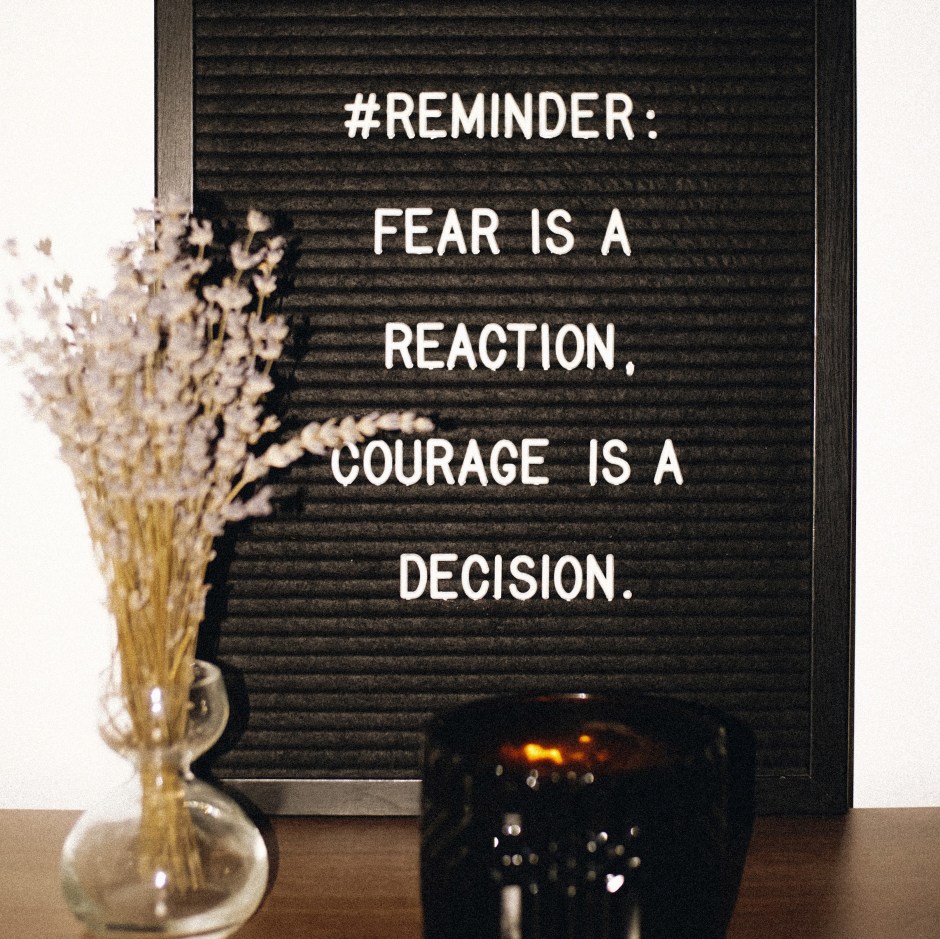
As Winston Churchill said, “Fear is a reaction. Courage is a decision.”

Photo by Cristi Ursea on Unsplash

Benefits of a Forgiveness Lifestyle: Especially During the Holidays

“I used to be angry for several days, but now I can usually calm down in about ten minutes.” These are words from one of the forgiveness heroes I interviewed who lives a forgiveness lifestyle. She’s human, so of course she will get angry at times. But she’s learned the art of controlling her anger, so her anger doesn’t control her.

The holidays can be wonderful. Lights, decorations, beautiful music, delicious food, social gatherings, and family time can brighten our lives. But the holidays can also be stressful, and we may find ourselves experiencing more angst than joy, especially if we have high expectations and want things to be perfect. Even a little perfection is tough for me to manage. That’s why I strive to live a forgiveness lifestyle, especially during the holidays.

It’s natural to desire perfection, but unrealistic to expect it. No one gets through life without pain and disappointment of some kind or another. Forgiveness may get us through tough times even better than drugs.

All major religions advocate forgiveness and so do health care professionals. The Mayo Clinic has guidance on forgiveness under its healthy lifestyle section. It advocates letting go of grudges and bitterness so you can have:

  • Healthier relationships
  • Improved mental health
  • Less anxiety, stress and hostility
  • Lower blood pressure
  • Fewer symptoms of depression
  • A stronger immune system
  • Improved heart health
  • Improved self-esteem

Sound good? Sure, but how do you actually live a healthy forgiveness lifestyle?

First, you decide you want to be a forgiving person.  Not everyone does. I have met people who seem to thrive on conflict and grudges. They appear to take immense satisfaction from judging and casting aspersions on those who don’t think or act like them. Some of us may be working on how to forgive those very people.

I, however, don’t like feeling bitter and resentful. I seem to have a low tolerance for unhappiness and am motivated to find ways to release negative emotions that haunt and hurt me. So I’ve learned the art of forgiveness.

Genuine forgiveness does a splendid job of calming us and facilitating serenity. We learn to accept the things we cannot change so we can move forward with courage, compassion, and creativity. Once we’ve experienced liberating, heart-felt forgiveness, we become motivated to apply our skills to all areas of our life. We are transformed.

Genuine forgiveness comes from the heart, but we must also use our head. The process of forgiving requires us to activate our rational brain. We become aware of survival instincts that shout at us to focus on negative information and define justice as revenge. This recognition allows us to quiet harmful messages and upshift to our cerebral cortex, the area where much of our information processing resides. We can then respond instead of react, reflect and seek understanding of whatever is bothering us.  We can decide whether our thoughts and behaviors are healthy or harmful. Our rational brain determines whether we will work on letting go of bitterness and resentment so we can experience the benefits of a forgiveness lifestyle.

If we decide we want to dispose of grudges and be gentler to ourselves and others, we need to seek connections that will support us and facilitate our growth. We know we’ve found the right connections if we find ourselves becoming kinder and less fearful, and if we feel we are being true to our authentic selves.

A forgiveness lifestyle means giving up whatever rewards we are receiving from being a victim and instead embracing our power to create a new story that showcases our courage and compassion. We’ll still get knocked down sometimes – that’s life – but we’ll have the skills and determination to get back up again.

Forgiving others often begins with forgiving ourselves. Sometimes we can’t acknowledge our mistakes because we believe that being vulnerable is dangerous. Professor and author Brene Brown said, “Vulnerability is not weakness. And that myth is profoundly dangerous.” Why is it dangerous? Because if we can’t take responsibility for our missteps, if we think that’s showing weakness, we deny ourselves a necessary part of our continuing transformation.

It’s also dangerous to become obsessed with our shortcomings. Regrets and shame will weigh us down and prevent us from evolving. The forgiveness lifestyle means learning from our mistakes, not dwelling on them. We give up our hope for a different past and refuse to use previous wrongdoings or failures as excuses to hide behind.

When we’re able to be compassionate with ourselves and realize we’re all doing the best we can, we will be able to use forgiving for giving to those we care about. Our burdens are lighter and our capacity to love expands.

This Thanksgiving, my family watched the recently released documentary “Gratitude Revealed.” The film reminded us to appreciate the beauty of nature through its glorious cinematography, and the resilience of the human spirit through the telling of inspirational stories. Gratitude is essential to a forgiveness lifestyle because it directs our perspective to the positive and provides the energy needed to deal with disappointment and pain. It’s not healthy to ignore the bad stuff in our lives, but it’s toxic to dwell on it.

Letting go of bitterness or shame gives us more time and energy for joy. Comedian Amy Schumer said, “We all accept too easily that life has to be hard and forget to make sure we have the most fun we can.”

I don’t think life is easy, but I agree with Amy that we have within us the power to make room for fun even when life is hard. We can make the decision to pursue a forgiveness lifestyle and get rid of burdens that prevent us from laughing, loving, and enjoying special moments.

During the holidays we can let ourselves feel the joy of whatever it is that lifts our spirits – be it Hallmark movies or documentaries, making cookies or buying cookies, caroling on or off key, shopping or refusing to shop – whatever fits your style. Let go of FOMO (fear of missing out) and embrace JOMO (joy of missing out). Don’t expect everyone to get along at holiday gatherings. I sometimes imagine myself in a situation comedy when conversations get weird. Perhaps the best thing I do is remember that our intentions are good, even if the results of our intentions aren’t.

A recipe for a happy holiday includes generosity – not of material gifts – but of grace. Huge helpings of forgiveness when reality falls short of expectations will lead to love and the reason for the season. Enjoy spending the holidays in style – forgiveness style.

Photo by Jakob Owens on Unsplash

Do You Believe in a God You Can Trust?

“In God We Trust” first appeared on US coins in 1864, a time when our nation was devastated by the Civil War and desperately in need of spiritual sustenance.  On July 11, 1955, President Eisenhower signed a bill requiring that the motto appear on US coins and currency. In 2019, a bill was signed requiring all South Dakota public schools to display “In God We Trust”  in a prominent place where students will likely see it.  

But what does it mean to trust in God? If I’m expected to trust – meaning have confidence in the character, strength, and truth of someone or something – I need to understand that someone or something. We may agree that God represents a deity or supreme being, but there’s a lot of variation from that point on. Quoting Enlightenment philosopher Voltaire, “If you wish to converse with me, define your terms.”

My concept of God stems from my childhood and the church where I grew up surrounded by good friends from school and caring Sunday School teachers. Hanging in the church hallway was a lovely picture of a Jesus figure with long hair and a kind smile in a beautiful, sunny meadow with adorable children and cute lambs. That became a comforting visual of God for me.

I didn’t think too much about that painting that has provided me the image of a God I could trust until I heard someone describe statues of Buddha as having a combination of male and female characteristics. That got me thinking. My Jesus/God image is not a burly guy with machismo, or an old, bearded king judging me from the sky. My God lives in nature and is gentle and nurturing.

Hindus have many images of the Divine. The Hindu Triumvirate is composed of three divine couples, male and female. They represent different aspects of our existence and are to be trusted to assist with a variety of human needs.

Chinese religion offers the yin and the yang, which represents complementary forces such as the feminine and masculine, dark and light, hot and cold. No force is superior to the other, but they need to be in balance to create harmony.

The Muslim word for God is Allah. Allah has no gender. Muslims believe gender is a human trait and Allah, who is beyond human, therefore has no gender. Pictures and statues of human figures are avoided to prevent idolatry, so mosques contain beautiful calligraphy, floral motifs, and geometric designs.

I especially appreciate one of the indigenous names for the Divine, Wakan Tanka, which can be translated as the “Great Mystery,” because the concept of God is mystifying and impossible for the human mind to fully comprehend. “Mother Earth” and “Father Sun” are often visuals for people who live close to nature.

Our mental images of God help us relate to, or feel connected to, a power that is vast, abstract, and eternal. Concepts of the divine vary because we need a vision we can personally relate to – a God we can trust.

My mom had to deal with breast cancer that metastasized and was very painful. She lived with it for many years, and she found comfort and strength in angels. She had a wonderful collection of angels in different sizes and shapes but all conveyed love and compassion. Mom has passed away and I wish I’d asked her more questions about her faith. I treasure the angels she left behind.

Visuals are powerful because of the feelings and emotions they invoke in us. One woman I interviewed for my forgiveness research loved the image of Guan Yin, Goddess of Mercy, Buddhist bodhisattva of compassion. She said, “Isn’t she beautiful? Such a kind lady.” That image guided her as she aspired to become a more compassionate, forgiving person.

Another woman I know who’d been abused by her husband had a strong connection with Jesus’s mother, Mary. She was a devout Catholic so made sure I knew she, “worshipped God, not Mary.” We’re trained to value hierarchy and know we can get in trouble if we don’t acknowledge power. But it was Mary who filled her heart and soul with love and peace.

When people tell me they don’t trust in God, their reasons often are something like this: “If there was a God, he wouldn’t let bad things happen to good people.” Some people personify God as a “he” with superpowers – like Santa Claus. He’s supposed to bestow requested gifts on the good people and lumps of coal on the naughty ones.

Some people don’t trust God because so many wars and hurtful acts are justified through religion. I hear, “Religion is why we have so much hate in the world.” Some people’s God appears as a fear-mongering politician or a military general who wants us to line up on one side or another of a human-conceived battlefield.

As we grow older, we can start to think of the Divine in more abstract ways, but we may still need to obtain inspiration through a visual image that provides us peace and joy. I believe God is Love, but how do I visualize love?

Love is an abstract concept, and sometimes I need a picture in my mind to comfort and encourage me while praying and seeking guidance. It may be a scene from nature, an image of the Divine, an adorable animal, an inspirational person.

Our God concept evokes our feelings, guides our thinking, and affects our behavior, so it’s important to reflect upon whether our personal idea of the Divine is one we can trust. What leads you to loving kindness, gives you courage, shields you from fear, and provides comfort and hope when life is tough?

People envision God in various ways, and I don’t trust in everyone’s concept of God. I do, however, trust in the Fruit of the Spirit – meaning the power of love, joy, peace, patience, kindness, generosity, faithfulness, gentleness, and self-control.

I hope the God you trust strengthens your character, brings you peace, and empowers you with the fruit of the Spirit.

Photo by Raimond Klavins on Unsplash

Forgiveness Transforms Victims Into Heroes

Hope is being able to see that there is light despite all the darkness.

~ Bishop Desmond Tutu

What makes someone a hero? According to my online dictionary, it’s being admired for courage, noble qualities, and outstanding achievement. Someone who forgives a major offense or injustice fits that definition.

Forgiveness requires the courage to confront and accept our pain, plus the ability to embrace compassion and empathy – which are noble qualities. The capacity to let go of a story of victimhood and forge a path forward that shines a light in the darkness is an outstanding achievement.

We honor heroes and remember victims. We’ve all been treated unfairly at some point in our lives and been hurt in ways we didn’t deserve. Victims suffer and feel justified outrage. Sometimes victims get sympathy and compensation for their suffering. Sometimes they get to avenge a wrong. But victims don’t become heroes until they are empowered through forgiveness.

When we’ve been victimized, it’s natural to focus on ourselves and whoever or whatever is to blame for the hurt we feel. We need to understand and process through our pain. But if we’re not careful, we may stay stuck in the past, wallowing in bitterness and regrets, too afraid or resentful to create new, improved chapters in our life stories.

Forgiveness heroes also have regrets and fears, but they learn from the past and focus on a brighter future. They use their struggles to become strong and help others.

How many politicians garner votes and media attention not by helping others, but through fear of “others,” convincing us that we are victims of the “bad” group? Life will get better if we just become enraged enough – and of course vote for them.

But victims aren’t heroes.

I listened to a pastor tell members of the LGBTQ+ community that he was a victim of their advocacy efforts – that they were trying to make him feel bad for refusing to preside at their weddings or allow them leadership roles in the church. In his defense, he said, “My niece is a lesbian and married her partner. I went to her wedding and she assured me she loved me and respected me, even though I wouldn’t officiate at her wedding.” I thought, “Your niece is a hero. She has compassion for you and loves you without conditions. You, however, are stuck being a victim.”

I taught a class where we discussed the issues of “white privilege” and “critical race theory.” One woman felt ashamed of her white privilege and didn’t know what to do about it. I said, “Feeling ashamed isn’t the goal. Being aware and using that awareness to make your community a more just and welcoming place is the objective.” 

When one group has oppressed the other, it’s common for both groups to become defensive and sometimes compete for victimhood status. No one should feel bad about who they are, but we should all feel bad about unjust or cruel behavior – even if it’s in the past and even if we weren’t directly involved. That’s the only way lessons will be learned and progress will occur.

Whether we’re talking about group or individual relationships, genuine forgiveness can only occur when past wrongs are acknowledged and their impact on the present brought into the light of awareness. Otherwise, both sides will dig in and exchange insults in a scenario resembling trench warfare, meaning horrible destruction with no productive results.

Forgiveness is all about the process of working through our grievance story so we can emerge from a house of sorrows into a garden of possibilities. It’s not about excusing, condoning, or overlooking wrongdoing. It’s about freeing ourselves from the burdens of bitterness and resentment. As a Lakota woman I interviewed said, “No one is going to make me hate.” She was a Sacred Pipe Carrier and a hero who overcame great pain to spread light and compassion.

There is darkness in the world and a very powerful part of our brain wants us to focus attention on that darkness. After all, to survive, we must see problems and recognize danger. But we can’t solve problems unless we shift our attention to the light.  

One of the forgiveness heroes I interviewed for my research said, “When I was able to overcome my dark emotions, it was like a cloud being lifted. Forgiveness helps you see people clearly and understand them better. I’ve learned to respect opinions that differ from my own and take offensive comments less seriously.”

Life is hard and relationships can be difficult, but we can empower ourselves with love and forgiveness. Mister (Fred) Rogers said, “Love isn’t a state of perfect caring. It is an active noun like ‘struggle.’”

We can all be forgiveness heroes. But first, we have to have the courage and compassion necessary to let go of being victims.

Photo by Curt Landry Ministries, curtlandry.com

Unity Requires Strength Training

I recently visited the nation of Tanzania with my husband and a group of Rotarians who wanted both to experience the adventure of an African Photographic Safari and to support the School of St. Jude, which provides a free education to some of Tanzania’s poorest and brightest children. Travel is special to me because it’s such a fun way to gain new insights and broaden my perspective. Our trip did not disappoint, as I learned from the people and the animals of Tanzania.

What did I learn? I learned that a generous thank you gift from the family of a sponsored child at the School of St. Jude was often a live chicken. We were blessed with live chickens from both the family my husband and I sponsored as well as the family our local club supported.  No, we didn’t take them home with us. We were able to pass them on to needy families from the school.

More importantly, I learned that it’s possible for a nation with more than 120 ethnic, linguistic, and religious groups to construct a national identity that unites them. They’ve found strength in their diverse customs and traditions. But unity doesn’t just happen, it requires strength training.

Tanzanians have problems, like people of all nations do. They struggle with issues like poverty, climate change, international relationships, resource management, corruption, injustice. Tanzanians, like Americans, have all the human instinctual emotions that make it hard for us to get along:  fear, greed, envy, anger, and the list goes on. Unity is difficult.

Christianity is the largest religion in Tanzania, but there are substantial Muslim and animist minorities. The current president of Tanzania, Samia Suluhu Hassan, is a Muslim woman who took office March 17, 2021. She, like Tanzania’s first president, Julius Nyerere, has emphasized unity both within Tanzania and with neighboring countries. On taking office she said, “This is the time to stand together and get connected. It’s time to bury our differences, show love to one another, and look forward with confidence.”

The people of Tanzania faced the challenge of creating a new nation in December of 1961 when they became independent from Great Britain. The territory of Tanganyika and the Zanzibar archipelago were combined to create Tanzania in 1964. The first president of Tanzania, Julius Nyerere, believed that unity was the key to the future and focused his efforts on establishing a national identity and language, deemphasizing ethnicity and divisions that could have torn his country apart. He said:

Cooperation and conflict are two sides of the same coin; both arise out of man’s relationship with his fellows. The larger the group, the greater the possibility of development through cooperation, and the greater the possibility of conflict.

Our Rotary group benefited from the efforts made by the Tanzanian people to create a harmonious, friendly nation. We were welcomed as American tourists and felt safe and respected throughout our travels. We visited public schools where children of different religions and tribes intermingled peacefully with their classmates. Tanzanian youth, like those everywhere, enjoyed getting their photos taken and posing with us for selfies.

St. Jude’s is a private school with a Christian base but welcomes children from all religious and ethnic backgrounds. Diversity is accepted and respected as a norm. But that hasn’t happened without a determined effort. For example, the student my husband and I sponsor wrote us that she was preparing for the school’s Cultural Day. She said, “There will be many groups that are presenting their cultures and our theme is ‘My Culture in a Modern Way.’ It’s all about how I can present my culture to the society and other people in a modern way.”  

Sharing cultural information creates understanding and trust. Without trust, we construct elaborate defense systems. Our energy goes towards attacking the “other,” whom we see as an enemy, not a neighbor with needs and fears much like our own.

The United States is, as our name declares, supposed to be united, but we’ve been having a hard time of it. It seems we don’t really want to be united – to listen and learn from each other in all our splendid diversity. We want to be divided so that we can prove that our side, our group, is the superior one. Could it be that deep down we believe equality and cooperation are way overrated?

We’re proud to be Americans and like to think of ourselves as exceptional – a first-world nation – better than second or third-world ones. But Proverbs 16:18 reminds us that “Pride goes before destruction, a haughty spirit before a fall.” The United States is a rich nation when it comes to GNP (gross national product), but there are many ways to be rich.

The founders of our United States were starting a new nation and knew compromise was necessary to create unity. We idolize the framers of our Constitution who provided a foundation for our democracy, and if I were having a discussion with them today, I believe they’d say, “The Constitution is a living document meant to adapt to the times. Listen to the diverse stories of all Americans and refrain from self-righteousness. Work toward unity – not maintaining power and proving one side is better than the other.”  

Psychologist Carl Jung is credited with a quote he never actually said: “Thinking is difficult, that’s why most people judge.” If we want to refrain from blaming and shaming each other, we need to think about how to create unity and then act.

At the School of St. Jude, graduates are encouraged to use their education to help their families, community, and nation. Their motto is, “Fighting poverty through education.” The father of the student we sponsored said, “I’m so proud of my daughter. She will get an education and come back and help us.”

The School of St. Jude’s goal is not to educate students so they can become wealthy and live somewhere with a higher standard of living – to propel themselves from the “third world” to the “first world.” It’s to educate them so they can help others. A sign in the school emphasized their focus on kindness and read as follows:

We believe that compassion, support, empathy, and a friendly smile can go a long way in showing care for others. We strive to approach each new day with hope and positivity, knowing that we are working together and fighting poverty through education.

The animals of Tanzania also demonstrated to me the importance of unity. At least the herbivores did. One of my favorite sites on our safari was when we passed what I called a colorful party. There were areas where we saw zebras, wildebeests, giraffes, elephants, impalas, ostriches, cape buffalo and more, all in one spot. Why were they partying together?  

Our safari guide said one reason the animals like to hang out together is, “They all have different strengths when it comes to defending themselves from predators and finding food. For example, some have good hearing, others great eyesight. Some feel vibrations, others smell trouble.” I like to think they also enjoy being together and appreciate a party with interesting guests that aren’t just like them.  

If we want unity, we will need to do some strength training. It’s not easy to appreciate differences. But like the animals, we humans, if unified, can protect each other from the dangers of natural disasters, diseases, environmental degradation, and more, instead of wasting our energy battling each other.

But unity means inviting everyone to the party.