Why Boundaries Help Us Forgive

When we fail to set boundaries and hold people accountable, we feel used and mistreated. This is why we sometimes attack who they are, which is far more hurtful than addressing a behavior or a choice.”

~ Brene Brown, The Gift of Imperfection

A therapist told a friend of mine that some things are unforgiveable. She listed three abusive actions taken by my friend’s spouse that she should not forgive. I agreed that the actions in question were cruel and should certainly not be excused, overlooked, or condoned. The behaviors were hurtful and confirmation that her spouse could not be trusted. However . . .

Forgiveness is for people – not bad behavior.

People who are ignorant, stressed out, broken, struggling, hurting (words that describe all of us at some time or another) need forgiveness. We won’t move past bitterness and regrets until we learn how to forgive ourselves and others for the bad behaviors that come with being human. Forgiveness is about personal and spiritual growth.

We humans have the potential to become kinder and wiser, more respectful and understanding. However, during the process of becoming, we may be very irritating, disrespectful, unfair, cruel, and downright despicable. That’s why boundaries are so important.

Bad behavior needs to be confronted and how we do it is crucial. Setting boundaries doesn’t mean punishing people or telling them off; it means establishing consequences for hurtful actions. For example, I was caretaker for my father when, in his 90s, he needed assistance. My dad had many great qualities, but they didn’t include being calm and patient. He had trouble containing his anger and the aging process hadn’t helped. I didn’t want to feel like a victim – bitter and resentful – so I set boundaries.

I did what I needed to do to feel good about the care I was providing, even if my father didn’t agree with my decisions. If Dad became angry, I kept calm and didn’t chastise him. I simply left, but came back later when he’d had a chance to calm down.

Boundaries aren’t about what you do to someone. They’re about what you do for yourself. The boundaries I set with my father allowed me to be forgiving because I took away his power to hurt me. I didn’t feel like a victim because I’d taken responsibility for my choices.

Those who get angry when you set a boundary are the ones you need to set boundaries for.

~ J.S. Wolfe, The Pathology of Innocence

Setting boundaries takes courage. We likely will make someone mad, even though boundaries are good for all concerned.  Allowing unethical or abusive behavior to continue doesn’t help either party. It just reinforces bad behavior and allows it to continue. 

My friend won’t be able to forgive her spouse until she’s determined how to set boundaries that will protect her from getting hurt. She may need to end the relationship altogether. Forgiving someone doesn’t mean you have to reconcile. It’s important to be safe and have healthy relationships.

Perhaps one did not want to be loved so much as to be understood.

~George Orwell, 1984

George Orwell reminds us that if someone says they love us, but continually do things that hurt us, they don’t understand us. We rightly question love that doesn’t make an effort to care for us in a way that makes us feel valued and secure.

The forgiveness process helps us work through our fear and hurt. We experience growth as we learn more about ourselves and what we need for a life that provides us with dignity and supportive relationships.

Have you ever erupted in anger at someone? Was that someone not the cause of your anger but instead someone you felt secure around or who just happened to be in the wrong place at the wrong time? If we’re not courageous enough to confront the object of our hurt (perhaps they hold power over us, or perhaps we’re really mad at ourselves) we may displace our anger on those we believe will tolerate our bad behavior.

If we haven’t been honest with ourselves about the cause of our pain, the hurt we’re feeling builds up. The volcano inside us is in danger of exploding any minute. If we lock our emotions inside, they will devour us and cause physical health problems. Boundaries set in a compassionate, caring, firm manner help us avoid disaster.

Establishing guidelines and limits helps us with difficult conversations. Human beings will always have different perspectives and points of view and it’s important that we listen and understand each other. However, when people get insulting or threatening, communication breaks down and relationships collapse.

We can establish boundaries by agreeing to take turns listening. If emotions get out of hand, time outs can be taken. Openness to growth and desiring stronger relationships are keys to effective communication.

Setting boundaries requires us to look honestly at the role we’ve played in a painful situation.  Some of my hardest forgiveness work is in gaining the humility to admit I could have handled a situation better; that I’m part of the problem. Being able to acknowledge “I should have spoken up” or “I shouldn’t have done that” is what leads to growth.

Sometimes we become comfortable with our discomfort and lean into the definition of insanity credited to Albert Einstein: doing the same thing over and over again, expecting a different result.  That’s when a new story is needed. One that looks at our situation from a different point of view and creates a new and improved chapter in our life journey.

Have the courage to address bad behavior while remembering we all need to forgive and be forgiven. We’re learning and need help on our individual paths.

Healthy boundaries ease fears and establish trust. They set us on the path to genuine forgiveness.

photo by Suki Lee

Favorite Forgiveness Quotes

However vast the darkness, we must supply our own light.

~Stanley Kubrick

Life can be extremely difficult and traumatic, and it can be hard to accept that. It’s natural to fight it and ruminate about darkness in our past that can’t be changed. Forgiveness provides us a way to escape gloom and bitterness and find our way to the light. Tough roads lead to beautiful destinations.

Favorite Forgiveness Quotes

Your willingness to wrestle with your demons will cause your angels to sing.

~August Wilson

Forgiveness takes courage. Why? Because we must overcome shame and blame, and accept the things about ourselves and others that have caused pain. Struggling with our fears opens the door to our angels, who may be in human or spirit form, and who can help us overcome our darkness.

Forgiveness Empowers Resilience

Your willingness to wrestle with your demons will cause your angels to sing.

~ August Wilson, Playwright

 Most people would agree that forgiveness is a virtue. They’d also agree that eating healthy foods and exercising are desirable goals. So why aren’t we all eating lots of vegetables and working out regularly with grace-filled hearts?

Most of us would like to be resilient, meaning being able to withstand or recover quickly from difficult situations. So why do we often struggle with our thoughts and emotions and sometimes turn to unhealthy avenues of escape?

Because resilience requires hard work.

Forgiving means uncovering a painful event, and moving beyond shame, bitterness, anger, or blame. It means accepting life as it is, even if we don’t like it, and working hard to find a way to move forward with courage, compassion, and creativity. The ability to forgive empowers resilience.

Elizabeth Edwards, attorney and activist, described resilience this way:

Resilience is accepting your new reality, even if it’s less good than the one you had before. You can fight it, you can do nothing but scream about what you’ve lost, or you can accept that and try to put together something that’s good.

Forgiving, resilient people learn from their mistakes instead of dwelling on them. Once they know better, they do better. They accept whatever circumstances they were born into or cannot change and let go of regrets after they’ve learned from them. 

Sometimes we fight what was and is so we don’t risk failing at what could be. But if we bury ourselves in shame, or if regrets keep us locked in our own personal prison, we can’t use whatever gifts and talents we possess to move forward and give to others. We blind ourselves to the joy that’s possible if we create a new and improved story about our struggles.

I dislike the saying “work smarter, not harder” because it may give us the idea that if we need to work hard at something, we’re not smart. And who wants to be considered stupid? As a teacher, I learned that most students would rather be bad than dumb, which is why they act badly when something is difficult for them. It’s a cover-up and a cop-out.

Setting priorities, working efficiently, focusing, and picking our battles are all smart ways to work. But sometimes the smartest thing we can do is work harder. If we want to forgive a major hurt quickly and easily and skip the part about wrestling with our demons, we will miss out on the genuine, heartfelt feeling of freedom and peace that comes with deep forgiveness. If we are facing a difficult challenge but seek shortcuts or easy outs instead of developing courage and wisdom, resilience will likely be elusive.

We’re lucky to live in a society wealthy enough for us to have free time to think about what makes us happy. Happiness is great. I love it. But Eleanor Roosevelt warned us that “Happiness is not a goal, it’s a by-product.” If we dwell on happiness or our lack of it, make it a goal in and of itself, we may miss out on the joy that comes with tackling tough situations. We may find ourselves stuck, because changing and evolving, learning and growing, requires us to work through some unhappy times. It requires us to confront tough emotions, take risks, understand people we don’t like, and accept that being human can be very hard indeed.

We all have a lot to learn in our lifetimes. That’s why forgiving, resilient people are open-minded and open-hearted. They’re not afraid to listen to others while staying true to themselves.

Brene Brown researches and writes about the benefits of vulnerability. She said, “Until we can receive with an open heart, we’re never really giving with an open heart.” It’s tough for us to admit our imperfections and own our pain. It makes us vulnerable. But vulnerability is also what joins us with others and lights the way for truth, genuine communication, and spiritual connections.

Both forgiveness and resilience are nurtured through the hope that there will be brighter days. We need faith in our ability to overcome suffering. Poet Shane Koyczan said, “If your heart is broken, make art with the pieces.” When we let go of our fear and grief, we find space in our hearts for love and forgiveness. We are able to create a life that provides us with dignity.

Resilience means you get back up again not just once, but again and again and again. You forgive yourself and whoever else you are blaming for your pain, count your blessings – no matter how meager – and keep trying. We can embrace wisdom from Confucius who said, “Our greatest glory is not in never failing, but in rising every time we fail.”

Forgiveness and resilience are skills that can be developed over time. Helen Keller, who was blind and deaf from the age of 19 months, surmounted her limitations and became an author, educator, and advocate. She said, “Although the world is full of suffering, it is also full of the overcoming of it.” And the good news is that like any skill, forgiveness and resilience get easier the more you work at them. Studies at the Yale School of Medicine found that our brains can be trained to be more resilient over time.

Famous role models like Michael J. Fox and Oprah motivate me to be strong, but I’m even more inspired by resilient neighbors and friends who have suffered tragedies or trauma. They realize we don’t get to dictate what challenges we face, but we do get to choose whether or not we use our hardships to create a meaningful future.

Forgiving, resilient people use gratitude to stay hopeful. They confront their struggles with courage, and they balance their negatives with positives – perhaps a hike in nature, a great cup of coffee, a heartwarming act of kindness, beautiful music. We choose whether to count sorrows or blessings.

Sometimes our pain and grief seem unbearable. We may need to congratulate ourselves for just getting out of bed in the morning and facing the day. We’ve kept moving and that’s something to be proud of. That’s how we make our angels sing.

Must We Walk This Lonesome Valley By Ourselves?

After the congregation finished singing the hymn “Jesus Walked This Lonesome Valley,” the pastor at the Methodist church I was visiting in Washington, DC, said, “That’s an awful song. It’s terrible. I should have looked more carefully at the music. I’m sorry!” The congregation burst into laughter.  The pastor’s distress was real, but how often do you hear a minister dissing a song from the hymnal?

 “Jesus Walked This Lonesome Valley” is an American folk song often heard at Lent, the time of year when Christians remember events leading to and including the death of Jesus Christ. The first verse of the song focuses on Jesus walking alone, presumably to the cross. But the next two verses are all about us:

We must walk this lonesome valley,

We have to walk it by ourselves.

Oh, nobody else can walk it for us.

We have to walk it by ourselves.

You must go and stand your trial,

You have to stand it by yourself.

Nobody else, can stand it for you.

You have to stand it by yourself.

I remember my grandmother singing that song. She’d lived through the Depression, WWI and WWII, health problems, money woes, and other hardships. The song brought her comfort and when I researched it, I found the song often touched people who were suffering and needed the courage to persevere. So why was the pastor upset?

Well, because she’d just preached a lovely sermon assuring us that God was always with us. That we did not walk alone because the Holy Spirit was within us. She also assured her congregation of the church’s support for them when they faced trials and tribulations. In other words, she’d been telling us we do not walk alone. And then what happens? We sing a song telling us we have to walk alone.

So what should we think? Do we need to be rugged individualists walking unaided, or supported believers in a God that provides unconditional love?

As with all words, the meaning is in people – not the words themselves. Words are interpreted by the listener, reader, or singer who then assigns them meaning.

I did a Google search and found that lonesome valley songs often had their roots in rural Appalachia or in African American spirituals and had varied lyrics. For example, “Jesus Walked This Lonesome Valley” does not appear in African American hymnals but the song, “I Want Jesus to Walk With Me” does. Other versions focus totally on Jesus and don’t demand we humans navigate this lonesome valley by ourselves.

I believe in the importance of support and guidance on our life journey. My doctoral forgiveness study led me to the theme of empowerment through connections, courage, compassion, and creativity. The people I interviewed described connections that helped them traverse their path to forgiveness. They had a Higher Power, religious communities, family, friends, therapists, or mentors that walked this lonesome valley with them.

But forming those connections required courage. They had to become vulnerable and ask for guidance. Sometimes they were walking their lonesome valley alone as they searched for understanding and support. What was important was that they kept walking, even if they felt alone for a while. They had faith and hope that kept them following the way of love and compassion.

I find faith to be most difficult when I’m worried about the future and feel helpless and confused. I don’t know what’s lurking in the valley and I’m not sure where my walk will lead me. Courage is needed to accept whatever the valley holds for me while trusting my path will help me grow and evolve.

Humility – meaning the ability to clearly perceive, and the willingness to accept, one’s strengths and weaknesses – is a welcome companion when I’m traveling rough roads. It provides me with freedom from believing I must know everything or do everything on my own. It advises me to accept myself and the world as it is and give up expectations and desires that are both futile and making me miserable.  

Spiritually, humility means recognizing there is a power greater than ourselves whom we can trust to love and guide us. It’s often hard to let go of my ego’s need for perfection or control, but when I can humble myself and surrender to love and a higher power, my burden becomes lighter and my joy greater.

I think my grandmother found comfort in singing about this lonesome valley because when times were tough it helped her face sorrow. Grief hurts, but it’s necessary to work through it – not deny it – and music can be a wonderful solace.

Additionally, the first verse told her that Jesus had to walk this lonesome valley alone. I think it helped her to know Jesus also suffered as he faced a tough journey to the cross where he died.

Grandma had a faith that inspired me. She walked this lonesome valley courageously and she was a role model for me. When I’m walking my own lonesome valleys, I often feel Grandma beside me as well as the kind, merciful God Grandma taught me about. Our valleys aren’t as deep when we open our hearts and let love in.

When I hear “Jesus Walked This Lonesome Valley” in the future, I’ll think of Grandma, and also of the pastor who assured her congregation we do not have to walk alone. We just need the courage to reach out, believe, and keep walking.

Who Are You Allergic To?

“If you take sulfa again, you will die.” That was the prognosis after the sulfa prescribed for my infection caused me to become ill and break out in hives that stretched from my head to the bottom of my feet.  It was my introduction into the dangers of allergies.

Allergies occur when our immune system identifies a certain substance as harmful, even though it isn’t. Apparently, the decision-making cells in my immune system mistakenly decided the foreigner sulfa was dangerous, so warrior cells were ordered to attack. Unfortunately, sending the troops into battle caused more harm than good. Nevertheless, in the future, my immune system will stubbornly continue to believe sulfa is a dangerous enemy. That fear, not the sulfa itself, will be what could kill me.   

It amazes me that our immune system has the same problem with fear that our brain does. When we overreact to perceived danger, we cause ourselves needless stress resulting in a variety of negative consequences: high blood pressure, anxiety disorders, insomnia, paranoia, damaged relationships – and on a broader scale – terrorism and war.

Perhaps it should come as no surprise that fear and overreaction are common themes affecting both our immune system and our limbic system (the part of the brain involved in our behavioral and emotional responses). After all, a significant challenge in life is assessing risks and creating balanced responses. Antibodies protect us against bacteria, viruses, and infections, but our immune system finds it hard to identify a real threat and react appropriately every time. Our limbic system also suffers from imperfection. It’s designed to protect us from danger, but we don’t always assess a situation accurately. Overreacting shuts down rational, higher-order thinking.

To complicate things further, overreacting to fear creates unhealthy responses that fuel more fears. Admitting we incorrectly responded may hurt our pride and make us fear vulnerability, so we cling to our “allergies.” What a vicious cycle it can be!

Taking control of our worries isn’t easy because one of our primary concerns is, naturally, our safety and survival. We develop “allergies” to each other because we fear being hurt and losing power, control, or resources. Unfortunately, those allergies will end up harming us if we don’t mount a rational counteroffensive.

Fear can lie to us. We need to have a conversation with our fears because they will demand to be heard and acknowledging them can be an insightful experience. But we don’t want them to scream at us and manipulate us into doing something stupid. And we don’t want them to keep us from learning and growing wiser. Seeking a compassionate, balanced discussion with our fears prevents them from moving in and creating allergies.

For example, it seems there are a plethora of politicians and media outlets that want me to fear immigrants and people from foreign countries. If I had let those voices create “allergies” within me, I would have missed out on tutoring English language learners from various countries and I wouldn’t have ventured to Kenya, Palestine, Nicaragua, Lithuania, and Peru on mission trips. My fears may have kept me safe, but they wouldn’t have opened my mind and heart to illuminating new understandings.

Being brave and courageous is a formidable task – at least it is for me – but I don’t want fear to steal my happiness or my integrity. I don’t want to develop the equivalent of an autoimmune disease.

Autoimmune diseases occur when our immune cells attack our own body by mistake. When I become hateful, jealous, greedy, dishonest (or any other adjective indicating a breakdown in my morals), I am attacking my own character. I need to keep my spiritual self healthy so I can fight off transgressions that tempt me because I’m afraid. Gandhi said, “The enemy is fear. We think it is hate; but, it is fear.”

The virtue of forgiveness is impossible to genuinely pursue when we are fearful. We can’t let go of a painful event if we are frightened that it will occur in the future. If I’m hurt by someone and don’t know how to prevent that pain going forward, I will hold onto it until I understand it and can figure out how to reduce it. If I don’t trust myself, I need to determine how to regain self-respect, so I don’t keep torturing myself with shame and regret.   

Actress Betty White said, “You don’t luck into integrity. You work at it.” We have to work at virtues, just like we work at a healthy diet or skill building. The potential is there, but we fool ourselves if we believe integrity develops without effort and a generous dose of humility.

We use our rational brain to fight fear and hate, but we’re also going to need love – love for all humankind, including ourselves. The Roman poet Virgil, around 37 BCE wrote in “Eclogues” that, “Love conquers all; let us surrender to love.” The Bible, 1 John 4:18, counsels us that, “Perfect love casts out fear.” Contemporary author Lorin Morgan-Richards wrote, “Love conquers the temporary hold of fear and hate. Inhumanity is a loop without it.” Throughout the ages, we’ve been advised to love one another, not fear one another.

A love for humankind, also known as agape love, is what unites and heals us. But human history testifies to how difficult it is to embrace. It requires compassion, which I think of as empathy with action. We not only strive to take the perspective and feel the emotions of another, we desire to let that understanding guide us.

When I’m fearful, I’m imprisoned in my own ego because I erect a wall that keeps out compassion. Shifting my perspective allows me to conquer my fear. For example, I was angry with someone recently because, in my mind, they were being arrogant and disrespectful to me. Whether they were or were not wasn’t the issue in my response. I reminded myself their behavior was a reflection on them, not me. Then I chose to be compassionate and consider what they were fearing – what their struggle was – and planned my response accordingly. The outcome was far better than had I given in to the allergy I was forming.

My fear sometimes stems from a lack of compassion for myself. I worry I will say or do something wrong. If I remind myself that it’s okay to say or do something that doesn’t meet expectations, I can relax, show myself self-love, and prevent my fears from harming me.

Autoimmune diseases are caused by a combination of genetics and environment. The same is true about our behaviors. Genetics provides us with a system that allows us to protect and defend ourselves and we can be grateful for that. But we can be especially thankful that we have it in our power to control our fears.

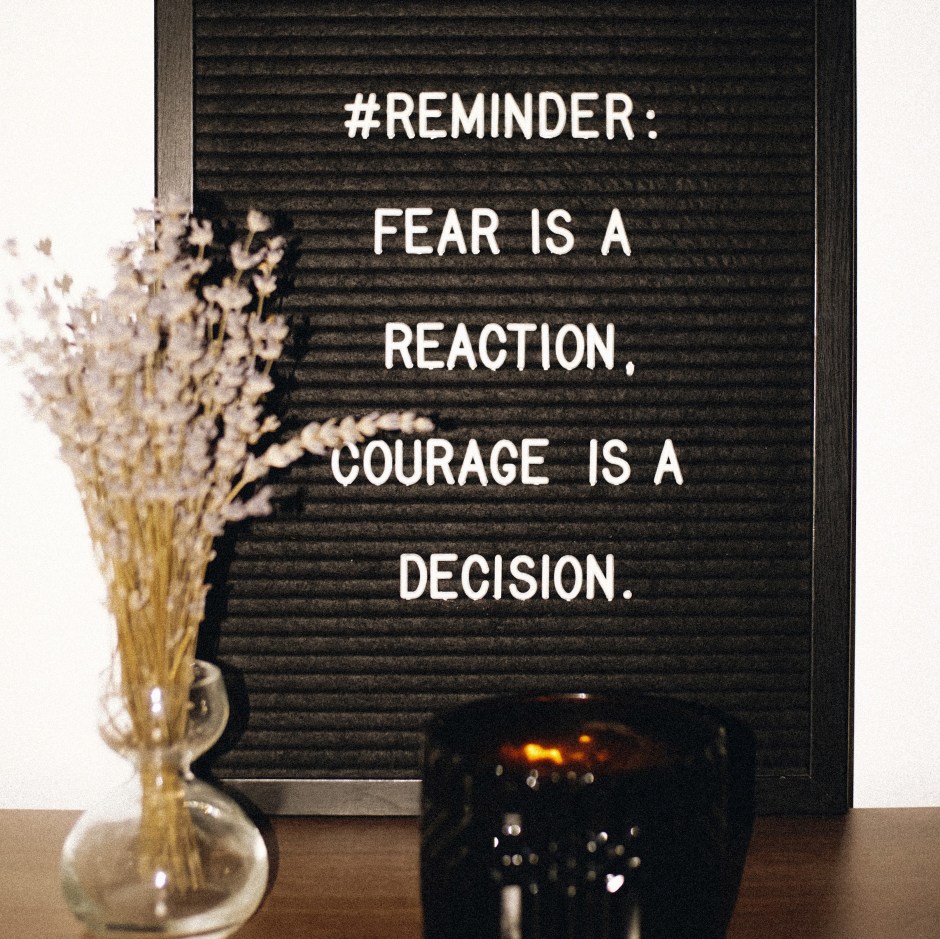
As Winston Churchill said, “Fear is a reaction. Courage is a decision.”

Photo by Cristi Ursea on Unsplash

Forgiveness Transforms Victims Into Heroes

Hope is being able to see that there is light despite all the darkness.

~ Bishop Desmond Tutu

What makes someone a hero? According to my online dictionary, it’s being admired for courage, noble qualities, and outstanding achievement. Someone who forgives a major offense or injustice fits that definition.

Forgiveness requires the courage to confront and accept our pain, plus the ability to embrace compassion and empathy – which are noble qualities. The capacity to let go of a story of victimhood and forge a path forward that shines a light in the darkness is an outstanding achievement.

We honor heroes and remember victims. We’ve all been treated unfairly at some point in our lives and been hurt in ways we didn’t deserve. Victims suffer and feel justified outrage. Sometimes victims get sympathy and compensation for their suffering. Sometimes they get to avenge a wrong. But victims don’t become heroes until they are empowered through forgiveness.

When we’ve been victimized, it’s natural to focus on ourselves and whoever or whatever is to blame for the hurt we feel. We need to understand and process through our pain. But if we’re not careful, we may stay stuck in the past, wallowing in bitterness and regrets, too afraid or resentful to create new, improved chapters in our life stories.

Forgiveness heroes also have regrets and fears, but they learn from the past and focus on a brighter future. They use their struggles to become strong and help others.

How many politicians garner votes and media attention not by helping others, but through fear of “others,” convincing us that we are victims of the “bad” group? Life will get better if we just become enraged enough – and of course vote for them.

But victims aren’t heroes.

I listened to a pastor tell members of the LGBTQ+ community that he was a victim of their advocacy efforts – that they were trying to make him feel bad for refusing to preside at their weddings or allow them leadership roles in the church. In his defense, he said, “My niece is a lesbian and married her partner. I went to her wedding and she assured me she loved me and respected me, even though I wouldn’t officiate at her wedding.” I thought, “Your niece is a hero. She has compassion for you and loves you without conditions. You, however, are stuck being a victim.”

I taught a class where we discussed the issues of “white privilege” and “critical race theory.” One woman felt ashamed of her white privilege and didn’t know what to do about it. I said, “Feeling ashamed isn’t the goal. Being aware and using that awareness to make your community a more just and welcoming place is the objective.” 

When one group has oppressed the other, it’s common for both groups to become defensive and sometimes compete for victimhood status. No one should feel bad about who they are, but we should all feel bad about unjust or cruel behavior – even if it’s in the past and even if we weren’t directly involved. That’s the only way lessons will be learned and progress will occur.

Whether we’re talking about group or individual relationships, genuine forgiveness can only occur when past wrongs are acknowledged and their impact on the present brought into the light of awareness. Otherwise, both sides will dig in and exchange insults in a scenario resembling trench warfare, meaning horrible destruction with no productive results.

Forgiveness is all about the process of working through our grievance story so we can emerge from a house of sorrows into a garden of possibilities. It’s not about excusing, condoning, or overlooking wrongdoing. It’s about freeing ourselves from the burdens of bitterness and resentment. As a Lakota woman I interviewed said, “No one is going to make me hate.” She was a Sacred Pipe Carrier and a hero who overcame great pain to spread light and compassion.

There is darkness in the world and a very powerful part of our brain wants us to focus attention on that darkness. After all, to survive, we must see problems and recognize danger. But we can’t solve problems unless we shift our attention to the light.  

One of the forgiveness heroes I interviewed for my research said, “When I was able to overcome my dark emotions, it was like a cloud being lifted. Forgiveness helps you see people clearly and understand them better. I’ve learned to respect opinions that differ from my own and take offensive comments less seriously.”

Life is hard and relationships can be difficult, but we can empower ourselves with love and forgiveness. Mister (Fred) Rogers said, “Love isn’t a state of perfect caring. It is an active noun like ‘struggle.’”

We can all be forgiveness heroes. But first, we have to have the courage and compassion necessary to let go of being victims.

Photo by Curt Landry Ministries, curtlandry.com

It’s vitally important to forgive, but we must never forget the truth behind the pain 

How do you forgive someone who has tortured you? Or someone who has murdered your mother and pregnant sister?  In what way do you forgive those who have oppressed and harmed your people, your community?

Do you forgive and forget?

Absolutely not. You remember, but you remember graciously.

Remembering graciously means remembering for the purpose of understanding and extending grace, as well as pursuing justice.  It does not mean condoning or excusing wrongdoing or oppression.

The people I interviewed for my doctoral research on the experience of forgiving injustices like those above told me, “I will never forget.”  One of the participants in my study said, “It’s important to remember with eyes wide open.” No denying, spinning, or avoiding.

Accountability and consequences were very important to the people I interviewed. Vengeance was not. Revenge would mean they were joining with their offenders in causing pain, not progress.

The man I interviewed who was tortured for his political beliefs said to his tormentor, “I will never forget what you’ve done to me because that’s my history. That’s my experience. I will keep it in my mind, so I keep working to stop this from happening to anyone else.” He forgave without forgetting because he knew that remembering would allow him to help create a better world. But he had to remember graciously, or anger and bitterness would harden his heart and prevent him from acting morally.

Our tough experiences have the capacity to teach us essential wisdom. They can provide valuable insights. German philosopher Arthur Schopenhauer said:

To forgive and forget means to throw away dearly bought experience.

Forgiveness has different meanings for different people, but overall, forgiveness is a virtue with the purpose of leading us to better lives. Genuine forgiveness helps us feel at peace and improves our relationships.  Fake forgiveness extends or even deepens hurt. Buried hurts are toxic because they deprive us of our need to grieve, to lament, to process and release our pain.

People who’ve been mistreated may have a hard time with the word forgiveness because they fear abuse and injustice will continue if they forgive. People who are concerned they will be blamed or shamed may have a hard time with the concept of forgiveness because they fear retribution. 

“Just get over it,” sounds so easy when we aren’t the ones who need to get over something that is churning inside us, affecting our health, our relationships, our future.

We see the desire to forgive and forget in conversations about what’s being labeled “critical race theory.” The message seems to be, “Let’s not talk about the parts of our history that are painful. Let’s just feel good about ourselves and forget the past.” But as author William Faulkner said:

The past is never dead, it’s not even past.

We are all a product of our past. It has shaped us. The same is true about communities and nations.

I was leading a conversation class for adults from various countries who were learning the English language, and one woman asked me, “Why are so many of the homeless people in our community Native Americans?” I paused for a moment, realizing that answering that question was complex. Another woman in the class piped in before I could respond, “They’re lazy. If they have arms and legs they should be working.”

Ugh! It’s so easy to judge others harshly and comfort ourselves by thinking they surely deserve whatever misfortune has befallen them. Psychologists call that “just world hypothesis” – or more accurately, “just world fallacy.” We don’t like unfairness, and it feels better to think good things happen to good people, bad things happen to bad people. And if all is fair, there’s no need to alter our personal behavior or our society. Just world fallacy is intoxicating because it comforts us and releases us from any responsibility to change ourselves or a situation that may, in fact, not be just.

 You’ll be relieved to know I didn’t start spouting psychological theories to the class. Instead I replied, “To understand why, you need to know history. Every person, every group, has a story to tell. You will not understand why until you learn their story.”

We talked about the history of Native Americans in our nation and in our community. We talked about historical trauma, prejudice, and differing perspectives. About what a tough time we humans have being compassionate and treating others – all others, no exceptions – with respect.

It takes time to learn history, to listen to people’s stories. It can be difficult because some things are hard to hear. We wish they had never happened.

We like to hear a lovely story of unending progress – what’s sometimes called a “whiggish” interpretation of history. That version of history tells us that if we are satisfied with the present, the past must have been a good thing and needn’t be examined for flaws. It’s nice to feel good about our history, but sometimes we need to hear truths that make us feel bad so we can heal and learn from them.

If a trail of damaged, wounded people has been left behind, whether it’s in a family or in a nation, understanding their history will help create beneficial paths forward. When past wrongdoings are acknowledged, those who have been harmed gain confidence that lessons have been learned from that past, and they gain trust and hope for the future.

Forgiveness and progress flourish when people come together for gracious remembering. The goal is recognizing a painful past, hearing each other’s stories, and reimagining the future. Ishmael Beah, Sierra Leonean author and human rights activist, said:

A lot of people, when they say forgive and forget, think you completely wash your brain out and forget everything. . .What I think is you forgive and you forget so you can transform your experiences, not necessarily forget them, so that they don’t haunt you or handicap you or kill you.

There is nothing easy about facing a painful past, so it’s understandable that we may wish we could simply extinguish agonizing memories, and there is research going on right now with the purpose of physiologically doing just that.  In some cases of post-traumatic stress disorder, that could be a good thing. But erasing a painful past could also turn into a way of making us vulnerable to a tragedy’s repeat performance. We may eliminate an opportunity for greater awareness and transformation.

It takes courage and compassion to remember graciously. But that is the way to create a brighter future.

Photo by Alex Shute on Unsplash

The Gift of Humility: Holiday Stress Reliever

The holiday season can be stressful. I’d love to be able to host a delightful Christmas party, bake delicious cookies, make excellent gift choices, send inspiring cards, decorate like an interior design pro, and create world peace. However, I’m not capable of all of that and if I don’t reduce my expectations to a realistic level the “most wonderful time of the year” will become the most anxiety-ridden time of the year.

Seeing “It’s the most wonderful time of the year” on several festive decorations caused me to look up who wrote the song with that title. I found out it was written by two men – Edward Pola and George Wyle. I can’t confirm this, but I’m guessing they never worried about holiday baking, gifts, decorating, greetings, or event planning.

I wonder if Ed and George were ever concerned about being alone at Christmas or not being invited to holiday parties. For some of us, it’s the loneliest time of the year because it seems everyone has happy families and friends to party with . . . except us. We feel pressured to be happy and that makes us unhappy.

The lyrics of the song read like something out of a Hallmark movie, and I do enjoy Christmas shows now and then throughout the holiday season. I love gazing upon the perfectly decorated homes and neighborhoods in the movies. The characters always have some disagreements and misunderstandings, but I rest assured knowing all will be forgiven by the end of the show. Often an episode ends with a gorgeous couple taking a sleigh ride through something that’s supposed to look like snow, and I feel content knowing they will live happily ever after. But then I switch off the TV. The kind, beautiful people have vanished and it’s just me and my undone to-do list.

 I googled, “What is the most stressful time of the year?”  The holiday season was the overwhelming first choice. A OnePoll survey found that 88% of Americans thought holidays were the most stressful time of the year.

The holiday season comes when daylight hours are at a minimum, temperatures are icy, and spring seems way too far away. At this time of year, we need a holiday very badly to cheer us up, and that won’t happen if we’re too stressed. We need to be enjoying as many Hallmark moments as possible. That’s where humility comes in.

Some dictionaries list “meekness,” “unassertiveness,” and “submissiveness” as synonyms for humility. But spiritual humility is the opposite, because it means the willingness to accept, and the ability to clearly perceive, one’s strengths and weaknesses. It takes some daring to let go of the idea that we need to do all those things we think we should do, and instead discern what we are capable of based on who we genuinely are and what gives us joy. People may not approve.

Think about what you truly love about the holiday season and decide what helps you make the shortest daylight hours of the year more livable. Remember that you’ll be receiving all sorts of ads and messages about what you need for a Merry Christmas and ignore as many as possible.

Maya Angelou advised, “If you’re always trying to be normal you will never know how amazing you can be.” That’s why humility is such a gift. Humility is accepting the ways we can’t meet society’s norms and rejoicing in the ways we can share our own unique gifts and talents. If we spend Christmas preparing treats for our dog and the squirrel that somehow found its way into our home, so be it.

The Japanese have a word, wabi-sabi, that means “finding beauty in imperfection and impermanence.” That isn’t an easy task because we want things to be perfect and may fear criticism and feel ashamed when we are unable to meet standards we believe are vital to belonging and respect. But I’ve found that an imperfect dinner or performance is just as satisfying as a perfect one when the people involved are filled with a joyful, loving spirit.

Humor can also help get us through a less than perfect holiday season. My mother had a plaque that I inherited with a saying that most likely helped her survive and thrive during many a holiday season. It read, “Blessed are we who can laugh at ourselves, for we shall never cease to be amused.”  Human beings are perfectly imperfect if we can be compassionate and take ourselves lightly. Laughter and humility are great companions and are all about the freedom of letting go and enjoying life – and the holiday season – in all its craziness.

There are many enticing holiday activity choices. But if I choose too many of them, it becomes like overeating. Sure, all the food is great, but the more I eat, the less delicious the food becomes. I need to choose what not to eat orI risk ruining what could be a very satisfying meal. During the holidays I need to realize I can only handle so much before I face diminishing returns.

We can choose what we want to worry about, too. Have you ever asked or been asked, “Are you ready for Christmas?”  When I’m asked that question, I answer, “I’m enjoying the beautiful lights and decorations as well as the music.” I want to delight in the holiday season, not prepare for a single day’s event.

I want to have the humility needed to be comfortable with the limitations of what I can cheerfully accomplish in the darkest weeks of the year. And I also want to do my part to spread light and warmth during a time that can seem bleak and cold. If I’m stressed and worried about being ready for Christmas and whether or not my Christmas will measure up to that of others, I may find myself on Santa’s naughty list with my inner Scrooge annoying those around me.

Humility truly is a gift to enjoy. The holiday season will very likely not go as planned and that’s just fine. Humility means letting go of expectations and opening up to the unexpected – to the mysteries and the magnificence of a holy time devoted to love and what’s beautiful about being human.

The most wonderful time of the year is whenever we can share our blessings generously, and gratefully rejoice in whatever kindnesses we are fortunate enough to receive.

Photo by Karsten Winegeart on Unsplash

Tough Paths Lead to Beautiful Destinations: Choose Forgiveness

I was asked to give the message at my church, Canyon Lake United Methodist, Rapid City, SD, and what follows are the stories and words I shared to express why forgiveness is a life-giving practice. If you wish to listen to the service that was focused on forgiveness follow this link https://www.youtube.com/watch?v=tRz3CsyYg_A or check out CLUMC’s website or Facebook page.

Have you ever noticed that in the Lord’s Prayer, “forgive us our trespasses as we forgive those who trespass against us” follows right behind “give us this day our daily bread?” I think it’s because forgiveness and bread are both life-giving and both are needed daily.

I know I make mistakes and do things I wish I hadn’t or wish I had on a regular basis. If I can’t forgive myself, or others, for simply being human, I’ll waste a lot of time and energy being angry and ashamed. Forgiveness allows us to spend more time smiling than frowning, being relaxed instead of tense, moving forward instead of backward.

I personally know how life-giving forgiveness can be and I chose to research forgiveness for my doctorate in psychology. I did qualitative research, meaning I analyzed stories and looked for patterns and themes in those stories. I interviewed people from different sacred belief systems who had forgiven a major transgression and looked specifically for what their stories had in common. I feel very blessed because I was led to people whose stories were insightful and their stories continue to inspire me today.

Forgiveness means different things to different people, so I like to start by explaining what I mean by forgiveness. First, forgiveness is NOT excusing, condoning, or ignoring bad behavior. It’s the opposite. It’s like Micah 6:8. We’re to act justly, love mercy, and walk humbly with our God. Forgiveness means balancing justice and mercy and remaining humble as we walk with our loving God.

It means having the courage to uncover and confront destructive thoughts and feelings so we can let go of our shame, anger, bitterness, and resentment. That takes time, but it’s worth it because when we experience genuine, deep forgiveness our health improves, our relationships become healthier, and we learn and grow spiritually.

The forgiveness experiences of the people I interviewed had four things in common that helped them forgive, and I call them the 4Cs: connections, courage, compassion, and creativity.

Connections

I first want to talk about connectionsbecause connections make the other 3 Cs possible. Connections are what led the people I interviewed from being victims to becoming forgiveness heroes. None of them were able to forgive without help. They all described spiritual, religious, or social connections that gave them two main things: support and guidance.

So how did their connections support them?

First, they did not pressure anyone to forgive. Pressure to forgive can backfire. Why? Because it can make someone feel worse. If you’re struggling to forgive and someone tells you, “Just let it go,” they’ve added to your shame, to your angst – because deep down you can’t do what they want you to do, what you may think a “good” person is supposed to easily be able to do. If you want to please someone, maybe even God, you may pretend to forgive and deny your genuine feelings. But holding your pain inside and trying to please others will add to your stress and hurt your health.

After I did a talk on my book, Being Human Is Hard: Choose Forgiveness, a man came up to me and said he appreciated the book and he surprised me with why. He was struggling with forgiveness issues and it reassured him to hear that genuine forgiveness of something major is difficult and takes time.

Connections are important because they provide support and also because they provide guidance. They show us the way through the forgiveness process and serve as role models.

One of the stories in my book is about William (pseudonym), who was Lakota and grew up on the Pine Ridge Indian Reservation. He and his family had experienced horrible acts of prejudice and trauma; William became resentful and as can happen if we’re filled with bitterness, he took his hurt out on others. His major turning point came when he heard Black pastors speak about their painful experiences, which he felt were even worse than his. One had helplessly watched his sister be set on fire and burned to death by prejudiced people who were never punished. “How were you able to forgive?” he asked them. And they said, “You talk about it, and you pray about it.” When William had trouble forgiving, he thought about the Black pastors, read the Bible, prayed, talked to his pastor and the people in his church.

We don’t have to do forgiveness alone, and that’s what helps us with the second C, courage.  

Courage

Forgiveness work takes courage because it means becoming vulnerable. It means uncovering and confronting things that may be shameful, embarrassing, humiliating, traumatic.

One of the people I interviewed, Katherine, said, “Before I discovered forgiveness I wasn’t open enough and willing to admit mistakes. I would have unknowingly kept secret certain things that would have been the heart of what needed to be heard and I wouldn’t have been able to get to the healing part. I wouldn’t have been able to see another’s viewpoint because I would have been too busy protecting my ego. Now I try to remember that it’s not all about me.”

Katherine had a strong connection to God and could feel the Holy Spirit within her. She said, “I’m always praying for the courage and strength to face forgiveness issues because I know that even though it’s scary, I will feel so liberated, relieved, and joyful to be a part of something that is healing.”

Sometimes we need the courage to listen to a perspective that’s different from our own and may seem threatening. At other times, in order to forgive, we may need to have the courage shown by the first person I interviewed for my research, a woman I called Esther, who taught me the importance of standing up for yourself and setting boundaries.

Esther was working in construction with men who didn’t appreciate women and she was being taken advantage of and disrespected. She grew resentful and extremely angry, and at first, she kept it inside. But one day she’d had enough and set some firm boundaries. I asked her how that helped her forgive. She said, “Once I set my boundaries and felt safe, I experienced an expanding of space. I started being able to see more deeply into my offender’s situation and I could better understand him. Releasing my fears allowed me to open up and have compassion.”

Once Esther felt safe, she could see her offender as a human being, instead of an object of hurt.

At a church conference this summer one of the speakers said, “I supported my addiction by blaming my parents.” He had what everyone would consider horrible parents, but he knew that he couldn’t serve God and help others unless he  accepted his imperfect childhood and figured out how to move beyond his past.

We may be a victim of oppression and someone else’s bad behavior and that’s awful. But we’ll never become empowered and liberated if we get stuck in victim status. To get unstuck, sometimes we need to set firm boundaries or possibly even walk away from a relationship that is harmful. At other times, we may need to swallow our pride and have the courage to really listen to perspectives that are uncomfortable. Those forgiveness issues are tough and require not just courage, they also require the third C, compassion.

 Compassion

Courage and compassion are best buddies because it’s hard to be kind when we’re in pain. It’s hard to be loving and grace-filled when we’re hurting.

But opening our hearts and minds to compassionately understanding ourselves and those who hurt us is a key to forgiveness.

Martin Luther King Jr. said:

He who is devoid of the power to forgive is devoid of the power to love. There is some good in the worst of us, and some evil in the best of us. When we discover this, we are less prone to hate our enemies.

We sometimes like to think of ourselves or others as either all good or all bad – it’s simpler that way – but that leads to forgiveness problems. We may refuse to believe anything good about someone who’s hurt us. When we do something hurtful, we may blame others because we are afraid our wrong action means we’re a bad person. Or we may retreat in shame and miss the opportunity to share our gifts and talents.

A Muslim man I called Basil forgave the person who tortured him and it definitely wasn’t easy. But he had compassion for his torturer, and that helped. He said, “I felt like he was a poor guy. I looked at him like he really, really needs help. From my experience with him, he was always worried, always wondering. He had this weird feeling he was not safe, and he wondered which one of his friends would betray him.” Basel was physically tortured in prison, but Basel realized his torturer had created a personal prison in his own mind and was letting his paranoid, fearful thoughts torture him.

When people hurt us, it’s natural to become bitter and resentful. But I remember the words of the Lakota woman I interviewed who had amazing compassion and forgave the people who murdered her mother and pregnant sister. She said, “No one can make me hate.”

I love that because hate isn’t good for us. Hateful, unforgiving thoughts can torture us. They keep us from experiencing the life Christ wants for us. I asked one of the women I interviewed why she thought God wanted us to forgive. She said simply, “Because it’s good for us.”

Forgiveness frees us and helps us give to others. Have you noticed that the word forgiving can be separated into for and giving? Forgiving is for giving because when we break free from the chains of bitterness or shame we can give more to others.

But forgiving a major transgression isn’t easy because it requires us to write a new, improved chapter in our life story. We need help from the fourth C, creativity.

Creativity

Forgiveness is about learning from our painful experiences. It’s about adjusting our perspective and transforming our thoughts so that we can create a healthier, more peaceful and joyful way of being.

James, brother of Jesus, experienced tough times with a great attitude. In James 1: 2-4 he advises us:

Whenever you face trials of any kind, consider it nothing but joy, because you know that the testing of your faith produces endurance, and let endurance have its full effect, so that you may be mature and complete, lacking in nothing.

Wow, that’s awesome inspiration, though I must admit I think considering trials of any kind nothing but joy seems a bit over the top.  I do agree that what makes forgiveness possible is knowing that tough paths lead to beautiful destinations. I don’t know why some of our best learning experiences involve humiliation, embarrassment, disappointment, and pain, but if we can accept that inconvenient truth, I know we are on the road to more joy, love, and peace.

We’re all on a journey and we’re all at different places on our journey. I often remember the words of Valerie, one of the woman I interviewed. She said, “We’re all on our own paths.” That’s so true, but often so hard to accept. Her words remind me to focus on compassion versus judgment. To relax my expectations and need to control, take deep breaths, and “Let go and let God.” 

When forgiveness is really tough, thankfulness and gratitude are more important than ever. During my toughest times, being grateful for the beauty of nature, acts of kindness, music, good books, friendly dogs, the ability to laugh at myself – those things have given me the positive energy I need to create something good out of something painful.

In Philippians 4:8, Paul, no stranger to adversity, counsels:

Finally, brothers and sisters, whatever is true, whatever is noble, whatever is right, whatever is pure, whatever is lovely, whatever is admirable—if anything is excellent or praiseworthy—think about such things.”

Why? Because gratitude shines a light for us, so we can see what path to take.

Some of the people I interviewed described forgiveness as a cleansing of the heart, and the forgiveness process as a way to scrub your heart clean and experience a liberating rebirth. David in the Bible saw it in a similar way. Listen to the words he uses when asking God for forgiveness in Psalm 51: 10 -12

Create in me a pure heart, O God,

and renew a steadfast spirit within me.

Do not cast me from your presence

or take your Holy Spirit from me.

Restore to me the joy of your salvation

and grant me a willing spirit, to sustain me.

I pray that we feel the Holy Spirit within us as we strive to shine a light of love and grace for our world.